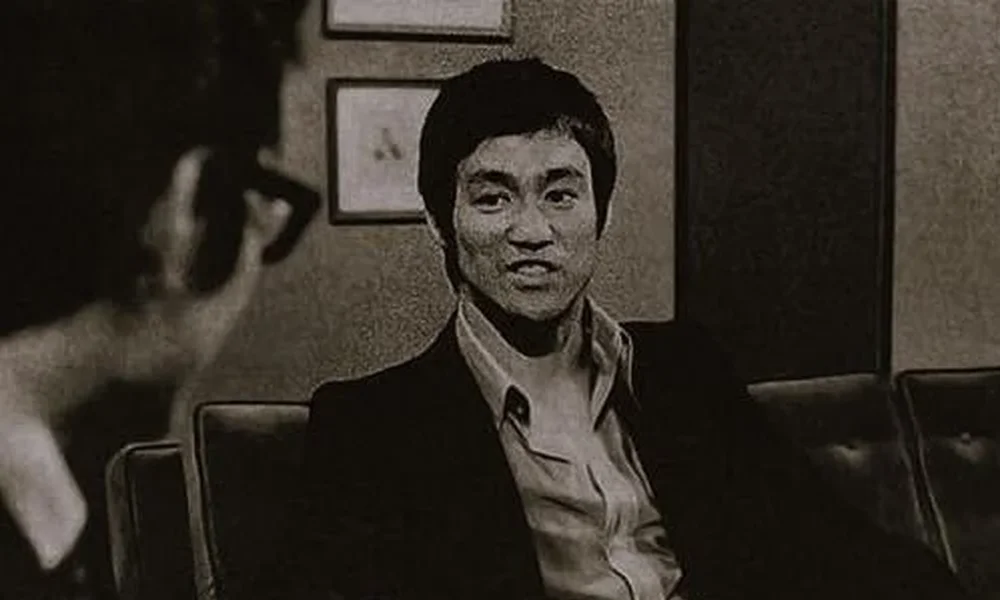
Bruce Lee, often referred to as the father of modern martial arts cinema, is a cultural icon whose influence spans far beyond the silver screen. Born on November 27, 1940, in San Francisco, California, Lee’s life was a testament to his unwavering dedication to martial arts and his passion for sharing his philosophy with the world. His legacy is marked by groundbreaking films, innovative training techniques, and a profound impact on popular culture. Despite his untimely death on July 20, 1973, Lee’s spirit continues to inspire millions around the globe.
PERSONAL INFORMATION
| Name | Bruce Lee |
|---|---|
| Place of Birth | San Francisco Chinese Hospital |
| Place of Death | Kowloon Tong |
| Date of Birth | 27 November 1940 |
| Age at Death | 32 Years |
| Zodiac Sign | Sagittarius |
| Date of Death | 20 July 1973 |
| Nationality | British Hong Kong, United States |
| Languages Spoken | Yue Chinese, English |
| Residence | Hong Kong, San Francisco, Seattle |
| Native Name | Bruce Lee, 李小龍 |
| Gender | Male |
| Signature |  |
| Birth Name | 李振藩 |
| Native Language | Yue Chinese |
| Religion | atheism |
PHYSICAL STATISTICS
| Height (in centimeters) | 172 cm |
|---|---|
| Height (in meters) | 1.72 m |
| Height (in feet inches) | 5′ 7″ |
FAMILY
| Spouse | Linda Lee Cadwell |
|---|---|
| Children | Brandon Lee, Shannon Lee |
| Father | Lee Hoi-chuen |
| Mother | Grace Ho |
| Siblings | Phoebe Lee, Agnes Lee, Robert Lee, Peter Lee Jung-sum |
EDUCATION
| Educated At | University of Washington, Seattle Central College |
|---|
CAREER
| Profession | film director, television actor, film actor, writer, film producer, philosopher, screenwriter, actor, martial artist, stunt performer, stunt coordinator, director |
|---|---|
| Awards Received | California Hall of Fame, star on Hollywood Walk of Fame |
| Field of Work | actor, film director, martial artist, philosopher, film screenwriter, film producer |
| Work Period Start | 1950 |
| Work Period End | 1973 |
| Notable Works | The Green Hornet, The Big Boss, Fist of Fury, Way of the Dragon, The Game of Death, Enter the Dragon, Marlowe |
Cost of Becoming
The journey of becoming Bruce Lee was not easy. Lee faced numerous challenges, from economic hardships to the racial discrimination of his time. His relentless pursuit of martial arts excellence required immense discipline and sacrifice. Lee often trained for hours each day, pushing his body and mind to their limits. This dedication came at a cost, as it left little time for a conventional social life or the pursuit of other interests. However, Lee’s commitment to his craft was unwavering, and it was this dedication that ultimately propelled him to international fame.
Identity Before Fame
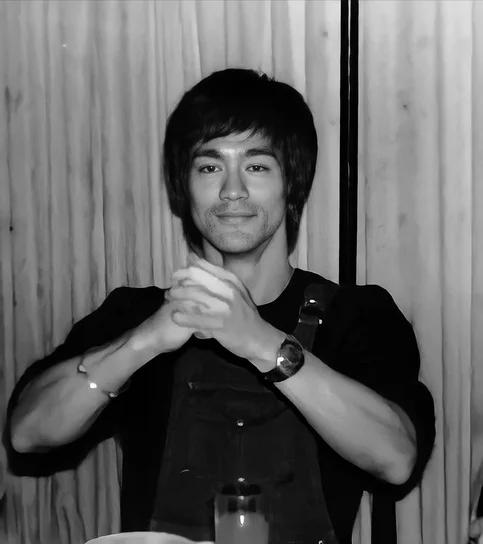
Before he became a household name, Bruce Lee was a young boy growing up in Hong Kong and San Francisco. He was introduced to martial arts at a young age and quickly developed a passion for it. Lee’s early years were marked by a strong thirst for knowledge and a desire to understand the philosophical and spiritual aspects of martial arts. He also had a keen interest in acting, which he pursued through local stage performances and small film roles. These experiences laid the foundation for his future career and helped shape his unique identity as both a martial artist and a performer.
Production Houses Associated With Bruce Lee
| Production House | Number of Movies |
|---|---|
| Orange Sky Golden Harvest | 5 |
| Concord Productions | 4 |
| Union Film Enterprises Ltd. | 4 |
| Cherokee Productions | 1 |
| Katzka-Berne Productions | 1 |
| Metro-Goldwyn-Mayer | 1 |
| Warner Bros. Pictures | 1 |
| Sequoia Pictures | 1 |
| Columbia Pictures | 1 |
| LL & JMJ Enterprises | 1 |
Directors Bruce Lee Frequently Works With
| Director | Number of Movies |
|---|---|
| William Beaudine | 3 |
| Chun Kim | 3 |
| Lo Wei | 2 |
| Robert Clouse | 2 |
| Norman Foster | 2 |
| E. Darrell Hallenbeck | 2 |
| Chu Kei | 2 |
| Ng Wui | 2 |
| Paul Bogart | 1 |
| Bruce Lee | 1 |
Movie Genres of Bruce Lee
| Genre | Number of Movies |
|---|---|
| Documentary | 33 |
| Drama | 16 |
| Action | 16 |
| Comedy | 5 |
| Crime | 4 |
| Thriller | 2 |
| Adventure | 2 |
| History | 2 |
| Mystery | 1 |
| Science Fiction | 1 |
Year-wise Movies of Bruce Lee
| Year | Number of Movies |
|---|---|
| 2023 | 1 |
| 2021 | 1 |
| 2020 | 2 |
| 2019 | 2 |
| 2012 | 1 |
| 2009 | 2 |
| 2005 | 1 |
| 2004 | 2 |
| 2002 | 2 |
| 2001 | 2 |
| 2000 | 2 |
| 1999 | 3 |
| 1998 | 3 |
| 1994 | 2 |
| 1993 | 1 |
Timeline
- 1940: Bruce Lee is born in San Francisco, California.
- 1941: Lee and his family move to Hong Kong.
- 1954: Lee begins training in Wing Chun under master Yip Man.
- 1959: Lee returns to the United States and enrolls at the University of Washington.
- 1961: Lee opens his first martial arts school, the Lee Jun Fan Martial Arts Association.
- 1966: Lee gains wider recognition for his role as Kato in the TV series “The Green Hornet.”
- 1971: Lee’s first starring role in a major film, “The Big Boss” (aka “Fist of Fury”), is released in Hong Kong.
- 1972: Lee’s film “Fist of Fury” becomes a major success, cementing his status as a martial arts superstar.
- 1973: Lee’s final film, “Enter the Dragon,” is released, achieving international acclaim.
- 1973: Bruce Lee dies on July 20, 1973, in Hong Kong.
Favourites
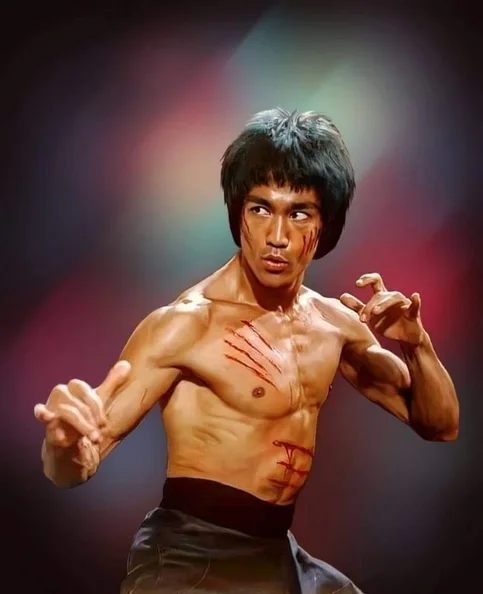
- Martial Art: Wing Chun, Jeet Kune Do
- Food: Chinese cuisine, especially Cantonese dishes
- Philosopher: Friedrich Nietzsche, Taoist philosophy
- Actor: James Dean, Marlon Brando
- Music Genre: Jazz, classical music
- Books: “The Art of War” by Sun Tzu, “The Tao Te Ching” by Lao Tzu
- Movie: “Rebel Without a Cause”
- Exercise: Stretching, weight training, cardio
- City: Hong Kong, Seattle
Controversies
- Death Conspiracy Theories: Many theories have emerged about Lee’s death, including claims of poisoning and curses.
- Racial Discrimination: Lee faced significant racial discrimination in Hollywood, often being typecast in minor roles.
- Jeet Kune Do Disputes: Some traditional martial artists criticized Lee’s approach to Jeet Kune Do, arguing it was too eclectic.
- Political Allegiances: Lee’s relationship with the Chinese government and his views on Chinese nationalism have been debated.
- Film Editing: There were controversies over the editing of Lee’s films, particularly “Enter the Dragon,” which some believed was altered to appeal to Western audiences.
- Personal Relationships: Lee’s relationships and interactions with other martial artists and celebrities have been subject to speculation.
- Mental Health Rumors: Some have suggested that Lee may have suffered from mental health issues, though this remains unproven.
Control vs Chaos
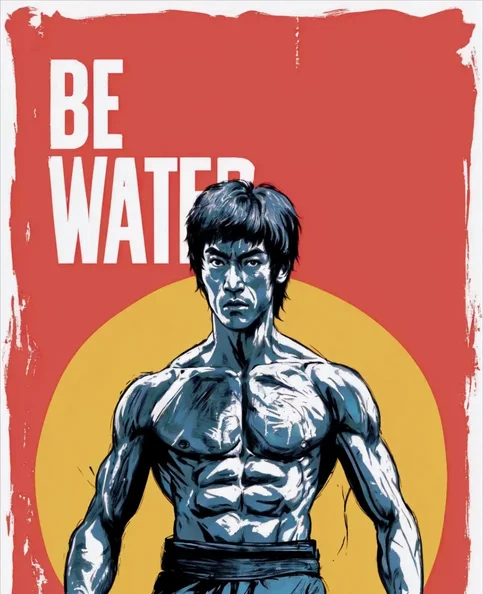
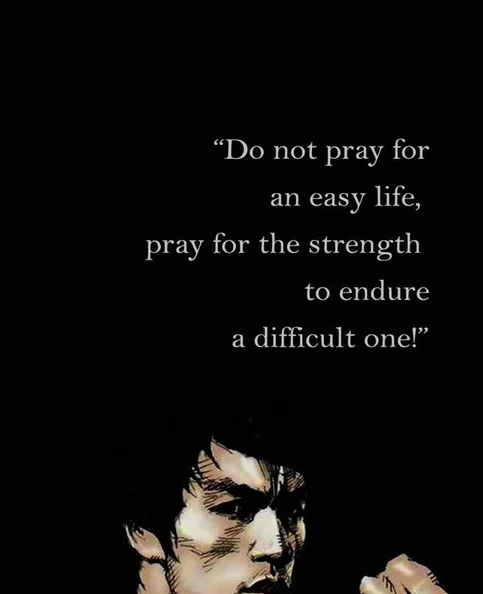
Bruce Lee’s philosophy was deeply rooted in finding a balance between control and chaos. He believed that true mastery of martial arts required a synergistic blend of discipline and adaptability. Lee emphasized the importance of fluidity in movement and thought, encouraging practitioners to be like water, able to flow around obstacles rather than breaking against them. This philosophy was not just limited to martial arts but extended to all aspects of life, including personal relationships and career choices. Lee’s ability to navigate the often turbulent waters of fame and success while maintaining his core values is a testament to his inner strength and resilience.
Emotional Geography
Bruce Lee’s emotional landscape was marked by a deep sense of purpose and a relentless drive to achieve his goals. Despite facing numerous challenges and setbacks, Lee maintained a positive outlook and a strong sense of self. His emotional resilience was evident in his ability to remain grounded and focused, even in the face of adversity. Lee’s emotional geography was also shaped by his deep love for his family, his passion for martial arts, and his commitment to spreading his philosophy of self-improvement and personal growth. His legacy continues to inspire people around the world to strive for excellence and to cultivate a sense of inner peace and balance.
FAQs
-
What is Bruce Lee’s full name?
Bruce Lee’s full name is Lee Jun-fan, but he is widely known as Bruce Lee.
-
What martial art did Bruce Lee practice?
Bruce Lee primarily practiced Wing Chun and later developed his own martial art, Jeet Kune Do (Way of the Intercepting Fist).
-
Where was Bruce Lee born?
Bruce Lee was born in San Francisco, California, on November 27, 1940.
-
What was Bruce Lee’s first major film?
Bruce Lee’s first major film was “The Big Boss” (also known as “Fist of Fury”), released in 1971.
-
How did Bruce Lee die?
Bruce Lee died on July 20, 1973, in Hong Kong. The official cause of death was cerebral edema, though various theories and speculations exist.
-
What is Jeet Kune Do?
Jeet Kune Do is a hybrid martial art created by Bruce Lee, emphasizing practicality, flexibility, and the efficient use of energy.
-
What is Bruce Lee’s most famous quote?
One of Bruce Lee’s most famous quotes is, “Be like water making its way through cracks. Do not be assertive, but adjust to the object, and you shall find a way around or through it.”
-
What was Bruce Lee’s height and weight?
Bruce Lee was approximately 5 feet 7 inches tall and weighed around 135 pounds.
-
What was Bruce Lee’s education?
Bruce Lee attended the University of Washington in Seattle, where he studied philosophy and drama.
-
What were Bruce Lee’s notable films?
Bruce Lee’s notable films include “The Big Boss,” “Fist of Fury,” “Way of the Dragon,” and “Enter the Dragon.”
-
What is the Bruce Lee Foundation?
The Bruce Lee Foundation is a non-profit organization dedicated to preserving and promoting the legacy of Bruce Lee and his philosophy of martial arts and personal development.
-
How did Bruce Lee influence martial arts?
Bruce Lee revolutionized martial arts by blending various styles and emphasizing practicality and adaptability. His approach, Jeet Kune Do, has influenced martial artists and practitioners around the world.
-
What is the “Bruce Lee Method” of training?
The Bruce Lee Method emphasizes a holistic approach to training, combining physical conditioning, mental discipline, and philosophical understanding. It focuses on developing a well-rounded individual capable of facing any challenge.
-
What are some common misconceptions about Bruce Lee?
Common misconceptions about Bruce Lee include the belief that he was a violent person, that he was a mythical figure with superhuman abilities, and that he was solely focused on martial arts without other interests.
-
What is the significance of Bruce Lee’s nunchucks?
Bruce Lee popularized the use of nunchucks in martial arts and films, showcasing their effectiveness and versatility. The nunchucks have since become a symbol of his influence and style in martial arts.
Bruce Lee’s life and legacy continue to captivate and inspire people worldwide. His journey from a young martial artist to an international icon is a testament to his determination, vision, and philosophy. Through his films, teachings, and personal example, Lee left an indelible mark on the world, challenging us to strive for excellence and to live our lives with purpose and integrity.