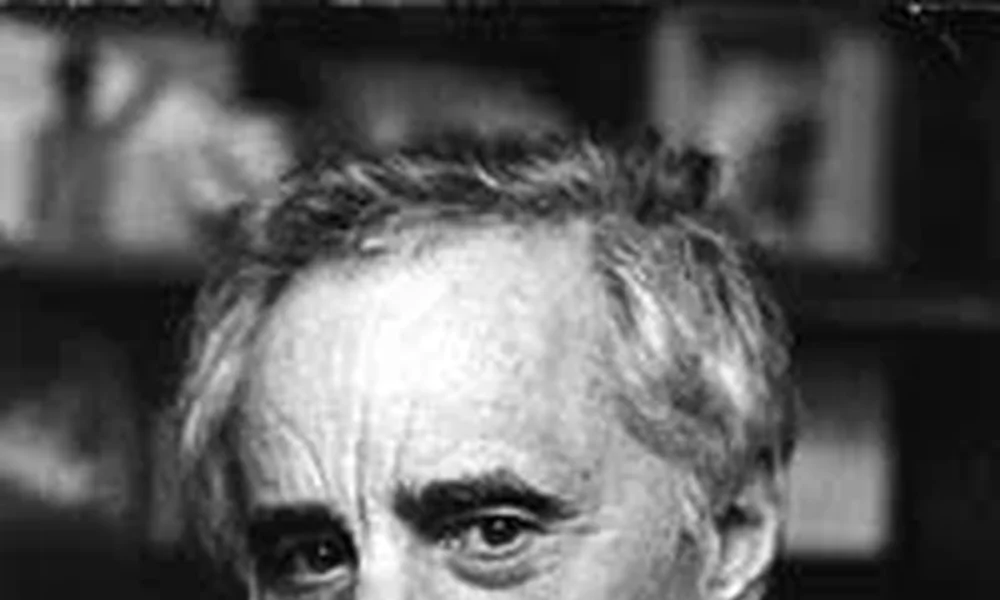
Elia Kazan was a towering figure in the world of cinema and theater, whose influence extended far beyond the silver screen. Born in 1909, Kazan’s life was marked by a relentless pursuit of excellence and a deep commitment to his craft. His directorial works, both on stage and in film, are celebrated for their emotional depth and social commentary. However, his legacy is not without its controversies, as his testimony before the House Un-American Activities Committee (HUAC) continues to spark debate. This article delves into the multifaceted life of Elia Kazan, exploring his artistic journey, personal struggles, and the enduring impact of his work.
PERSONAL INFORMATION
| Name | Elia Kazan |
|---|---|
| Place of Birth | Constantinople |
| Place of Death | New York City |
| Nationality | United States, Greece |
| Date of Birth | 07 September 1909 |
| Age at Death | 94 Years |
| Zodiac Sign | Virgo |
| Date of Death | 28 September 2003 |
| Languages Spoken | English, Modern Greek, Turkish |
| Gender | Male |
| Native Name | Elia Kazan, Ηλίας Καζαντζόγλου |
| Signature |  |
| Native Language | English |
PHYSICAL STATISTICS
| Height (in centimeters) | 173 cm |
|---|---|
| Height (in meters) | 1.73 m |
| Height (in feet inches) | 5′ 8″ |
FAMILY
| Children | Nicholas Kazan, Chris Kazan |
|---|---|
| Spouse | Barbara Loden, Frances Kazan, Molly Kazan |
EDUCATION
| Educated At | Williams College, Yale School of Drama, Juilliard School, New Rochelle High School |
|---|
CAREER
| Profession | film director, screenwriter, film producer, writer, theatrical director, film actor, director, actor, film screenwriter |
|---|---|
| Awards Received | Directors Guild of America Award, Academy Award for Best Director, Academy Award for Best Director, Golden Globe Award for Best Motion Picture – Drama, Tony Award for Best Director, Tony Award for Best Director, Tony Award for Best Director, Kennedy Center Honors, National Board of Review Award for Best Film, star on Hollywood Walk of Fame, Academy Honorary Award, Donaldson Awards |
| Nominations | Academy Award for Best Director, Academy Award for Best Director, Academy Award for Best Director, Academy Award for Best Director, Academy Award for Best Director, Academy Award for Best Writing, Original Screenplay, Academy Award for Best Picture, Tony Award for Best Director, Tony Award for Best Director, Tony Award for Best Direction of a Play |
| Employer | The New School |
| Work Period Start | 1934 |
| Work Period End | 1976 |
Cost of Becoming
The path to greatness often comes with a steep price, and for Elia Kazan, the cost was significant. His rise to prominence in the theater and film industry demanded immense dedication and sacrifice. Kazan’s early years were marked by financial struggle and personal hardship, but his unwavering commitment to his artistic vision propelled him forward. The toll this took on his personal life, however, was considerable. His controversial actions, such as his testimony before the HUAC, further complicated his legacy, leaving a legacy of both admiration and criticism.
Identity Before Fame
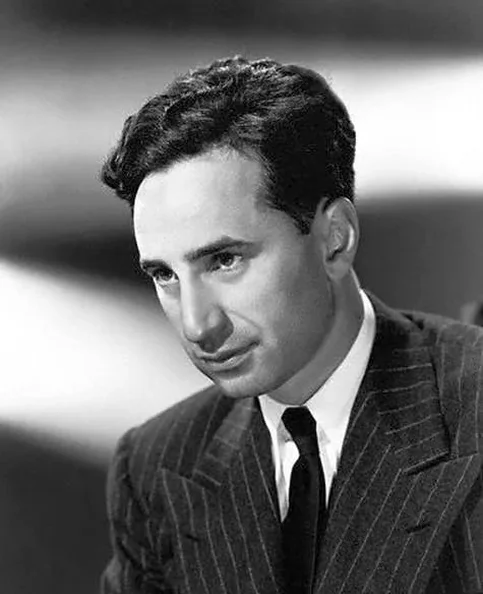
Before he became a household name, Elia Kazan was a young immigrant with a dream. Born in Constantinople (now Istanbul) to Greek parents, he moved to the United States with his family at the age of four. Growing up in the Bronx, New York, Kazan faced the challenges of assimilation and poverty. Despite these obstacles, his passion for the arts was evident from a young age. He studied at Williams College and later at the Yale School of Drama, where he honed his skills and began to forge his identity as a director. These early experiences shaped his worldview and laid the foundation for his future success.
Production Houses Associated With Elia Kazan
| Production House | Number of Movies |
|---|---|
| Warner Bros. Pictures | 3 |
| ARTE | 2 |
| Thirteen | 2 |
| HBO | 1 |
| HBO Documentary Films | 1 |
| Warner Bros. Entertainment | 1 |
| Van Ness Films | 1 |
| Foxstar Productions | 1 |
| Fox Television Studios | 1 |
| Lorac Productions | 1 |
Directors Elia Kazan Frequently Works With
| Director | Number of Movies |
|---|---|
| Laurent Bouzereau | 3 |
| Anatole Litvak | 2 |
| Annie Tresgot | 2 |
| Rebecca Miller | 1 |
| Jean Negulesco | 1 |
| Michele Farinola | 1 |
| Mimi Freedman | 1 |
| Martin Scorsese | 1 |
| Kent Jones | 1 |
| Richard Schickel | 1 |
Movie Genres of Elia Kazan
| Genre | Number of Movies |
|---|---|
| Documentary | 24 |
| Drama | 4 |
| Crime | 3 |
| TV Movie | 2 |
| History | 2 |
| Romance | 1 |
| Music | 1 |
| Comedy | 1 |
| Thriller | 1 |
Year-wise Movies of Elia Kazan
| Year | Number of Movies |
|---|---|
| 2019 | 2 |
| 2017 | 1 |
| 2014 | 2 |
| 2010 | 1 |
| 2006 | 4 |
| 2005 | 1 |
| 2003 | 1 |
| 2001 | 1 |
| 1998 | 1 |
| 1995 | 1 |
| 1994 | 1 |
| 1990 | 1 |
| 1988 | 2 |
| 1985 | 1 |
| 1982 | 2 |
Timeline
- 1909: Born in Constantinople, Ottoman Empire (now Istanbul, Turkey)
- 1913: Moved to the United States with his family
- 1930-1932: Studied at Williams College
- 1932-1934: Attended the Yale School of Drama
- 1935: Joined the Group Theatre in New York City
- 1941: Directed his first Broadway play, “Thieves’ Carnival”
- 1945: Directed his first feature film, “A Tree Grows in Brooklyn”
- 1951: Directed the iconic film “A Streetcar Named Desire”
- 1954: Testified before the House Un-American Activities Committee (HUAC)
- 1999: Received a lifetime achievement Academy Award, despite controversy
Favourites
- Favorite play: “Death of a Salesman” by Arthur Miller
- Favorite film: “On the Waterfront” (1954)
- Favorite actor: Marlon Brando
- Favorite director: Ingmar Bergman
- Favorite book: “The Great Gatsby” by F. Scott Fitzgerald
- Favorite painter: Pablo Picasso
- Favorite composer: Dmitri Shostakovich
- Favorite writer: Dostoevsky
Controversies
- Testimony before the HUAC in 1954, naming former Communist Party members
- His decision to testify was seen as a betrayal by many in the entertainment industry
- Accusations of nepotism in his casting choices
- Claims of favoring certain actors over others, particularly those associated with the Actors Studio
- Allegations of sexual misconduct, though never substantiated in court
- Criticism for his direction of “America, America,” which was seen as overly romanticized
- Questions about the historical accuracy of his memoir, “A Life”
- Controversy over his Oscar acceptance speech in 1999, where he defended his HUAC testimony
- Debates about the artistic value of some of his later films, such as “The Arrangement”
- Criticism for his perceived elitism and distance from the working-class themes he often portrayed in his work
Control vs Chaos
Elia Kazan’s career was a delicate balancing act between control and chaos. On one hand, he was a meticulous director, known for his precise control over every aspect of his productions. He demanded excellence from his actors and technicians, often pushing them to their limits. On the other hand, he was a visionary artist who embraced the chaos and unpredictability of the creative process. This duality allowed him to produce works that were both technically brilliant and emotionally resonant, leaving a lasting impact on the world of cinema and theater.
Emotional Geography
Kazan’s work often explored the emotional landscape of his characters, delving into themes of identity, struggle, and redemption. His upbringing in the Bronx, a place of contrasts and contradictions, deeply influenced his artistic vision. The immigrant experience, the clash of cultures, and the pursuit of the American dream were recurring motifs in his films. Through his lens, the emotional geography of his characters became a reflection of the broader human experience, resonating with audiences across generations.
FAQs
-
What is Elia Kazan best known for?
Elia Kazan is best known for his groundbreaking work in both theater and film. He directed iconic plays such as “A Streetcar Named Desire” and films like “On the Waterfront” and “East of Eden.” His ability to capture the emotional depth of his characters and his social commentary made him a significant figure in 20th-century American arts.
-
Where was Elia Kazan born?
Elia Kazan was born in Constantinople, Ottoman Empire (now Istanbul, Turkey) in 1909. He moved to the United States with his family at the age of four and grew up in the Bronx, New York.
-
What was Elia Kazan’s early career like?
Kazan’s early career was marked by his involvement in the Group Theatre in New York City. He began as an actor but quickly transitioned to directing. His first Broadway play, “Thieves’ Carnival,” was directed in 1941, and he made his directorial debut in film with “A Tree Grows in Brooklyn” in 1945.
-
What is the significance of his work with the Actors Studio?
The Actors Studio, co-founded by Kazan, became a breeding ground for method acting. This technique, which emphasizes emotional realism and inner motivation, revolutionized acting and influenced a generation of actors, including Marlon Brando and James Dean.
-
What was Elia Kazan’s most controversial decision?
Kazan’s most controversial decision was his testimony before the House Un-American Activities Committee (HUAC) in 1954, where he named former Communist Party members. This act was seen as a betrayal by many in the entertainment industry and tarnished his reputation for years.
-
How did his HUAC testimony affect his career?
The backlash from his HUAC testimony led to a period of isolation in Hollywood. Many colleagues and friends turned against him, and his career suffered. However, he continued to work and eventually received recognition for his contributions to cinema and theater.
-
What are some of his most critically acclaimed films?
Some of Elia Kazan’s most critically acclaimed films include “A Streetcar Named Desire,” “On the Waterfront,” “East of Eden,” and “A Tree Grows in Brooklyn.” These films are celebrated for their emotional depth, social commentary, and outstanding performances by leading actors.
-
What was his relationship with Arthur Miller?
Elia Kazan and Arthur Miller had a complex and sometimes contentious relationship. Kazan directed Miller’s play “Death of a Salesman” on Broadway, which was a critical success. However, their friendship was strained by Kazan’s HUAC testimony, as Miller was a vocal critic of the committee.
-
What awards did Elia Kazan receive?
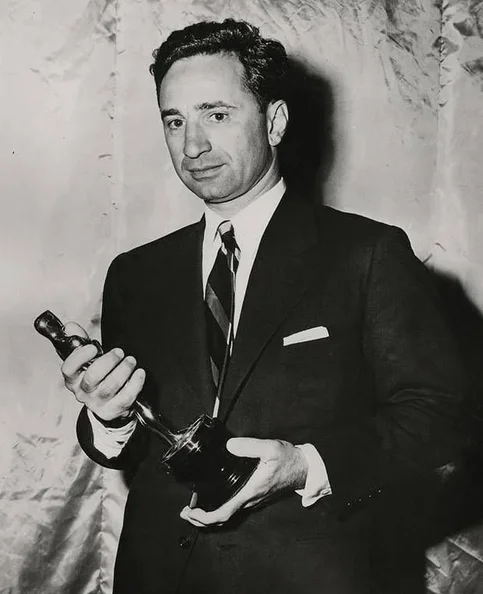
Elia Kazan received numerous awards throughout his career, including two Academy Awards for Best Director for “Gentleman’s Agreement” (1947) and “On the Waterfront” (1954). He was also awarded a lifetime achievement Oscar in 1999, which sparked controversy due to his HUAC testimony.
-
How did he influence the film and theater industry?
Kazan’s influence on the film and theater industry is profound. His emphasis on realistic and emotionally intense performances, his innovative directing techniques, and his willingness to tackle controversial social issues set new standards for the arts. He mentored and inspired a generation of actors and directors, shaping the landscape of American cinema and theater.
-
What is the legacy of Elia Kazan?
Elia Kazan’s legacy is complex and multifaceted. While his artistic achievements are widely celebrated, his HUAC testimony continues to be a point of controversy. His contributions to the development of method acting and his groundbreaking films have left an indelible mark on the world of arts and culture. Despite the controversies, his influence remains significant and continues to be studied and debated.
-
What did Elia Kazan think about his HUAC testimony later in life?
In his later years, Kazan defended his decision to testify before the HUAC, believing that he had done what he thought was necessary to protect his career and the well-being of his family. However, this stance did little to quell the ongoing debates about his actions and their impact on the entertainment industry.
-
What are some of his lesser-known works?
While many of Kazan’s films are well-known, some of his lesser-known works include “Panic in the Streets” (1950), “Wild River” (1960), and “The Arrangement” (1969). These films, though not as celebrated as his major works, showcase his versatility and continued exploration of different themes and styles.
-
What was his approach to directing actors?
Kazan was known for his hands-on approach to directing actors. He encouraged them to delve deep into their characters, often using method acting techniques to achieve authentic and compelling performances. His ability to create a safe and supportive environment for his actors led to some of the most memorable performances in film history.