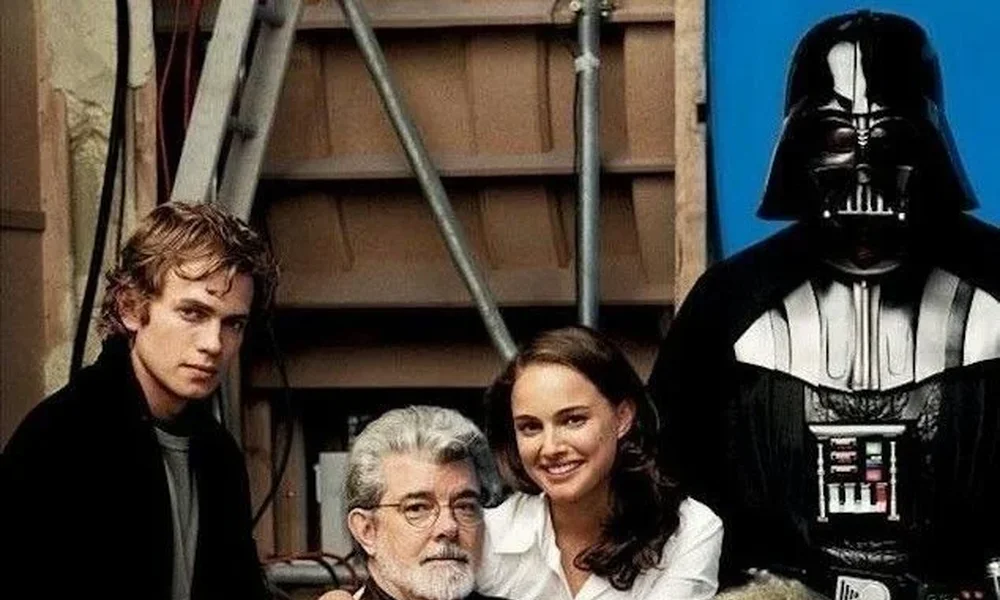
George Lucas, the visionary filmmaker and entrepreneur, is best known for creating the “Star Wars” and “Indiana Jones” franchises, which have left an indelible mark on popular culture. His innovative spirit and technological advancements in the film industry have made him a household name. Beyond his creative endeavors, Lucas has also been a significant philanthropist and educator, contributing to various causes and initiatives. This article delves into the life, achievements, and controversies of George Lucas, providing a comprehensive overview of his journey from a young filmmaker to one of the most influential figures in the entertainment industry.
PERSONAL INFORMATION
| Name | George Lucas |
|---|---|
| Nationality | United States |
| Date of Birth | 14 May 1944 |
| Age | 81 Years |
| Zodiac Sign | Taurus |
| Place of Birth | Modesto |
| Native Name | George Lucas |
| Residence | Marin County |
| Languages Spoken | English |
| Gender | Male |
| Native Language | English |
| Birth Name | George Walton Lucas Jr. |
PHYSICAL STATISTICS
| Height (in centimeters) | 168 cm |
|---|---|
| Height (in meters) | 1.68 m |
| Height (in feet inches) | 5′ 6″ |
FAMILY
| Spouse | Mellody Hobson, Marcia Lucas |
|---|---|
| Children | Amanda Lucas, Katie Lucas |
EDUCATION
| Educated At | University of Southern California, Downey High School, USC School of Cinematic Arts, Thomas Downey High School, Modesto Junior College |
|---|
CAREER
| Profession | film producer, film director, art collector, film editor, cinematographer, screenwriter, actor, writer, science fiction writer, film actor, executive producer, businessperson, director |
|---|---|
| Notable Works | American Graffiti, THX 1138, Star Wars |
| Member Of | American Academy of Arts and Sciences, Writers Guild of America West |
| Nominations | Academy Award for Best Director, Academy Award for Best Director, Academy Award for Best Writing, Original Screenplay, Academy Award for Best Writing, Original Screenplay |
| Awards Received | California Hall of Fame, National Medal of Arts, Kennedy Center Honors, Disney Legends, AFI Life Achievement Award, Science Fiction and Fantasy Hall of Fame, Fellow of the American Academy of Arts and Sciences, Inkpot Award, Hugo Award for Best Dramatic Presentation, Hugo Award for Best Dramatic Presentation, Hugo Award for Best Dramatic Presentation, Hugo Award for Best Dramatic Presentation, Hugo Award for Best Dramatic Presentation, Jane Fonda Humanitarian Award, Honorary Palme d’Or |
| Genre | speculative fiction film |
| Work Period Start | 1964 |
FINANCIAL
| Net Worth | 5000000000, 4600000000 |
|---|
Cost of becoming
The path to becoming a legendary filmmaker like George Lucas was not without its challenges and sacrifices. Born in 1944, Lucas grew up in Modesto, California, where he developed a fascination with cars and filmmaking. His initial foray into film school was met with skepticism and limited resources, but he persisted, often funding his projects through odd jobs and personal savings. The financial strain of producing independent films, such as “THX 1138,” took a toll on him, but his unwavering dedication and innovative ideas eventually paid off with the enormous success of “Star Wars.” The cost of becoming a filmmaker of his caliber was high, but the rewards have been immeasurable.
Identity before fame
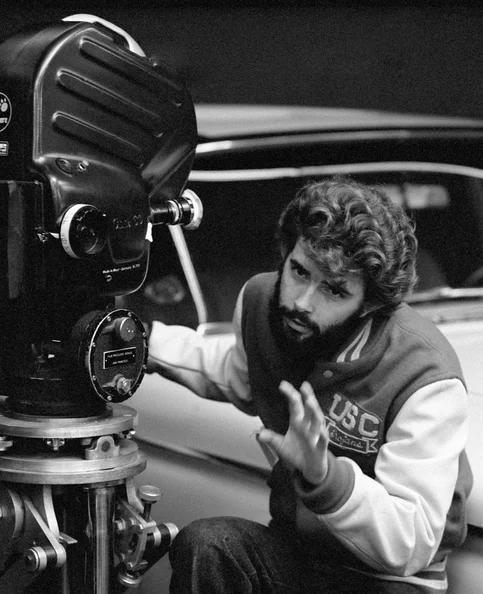
Before he became a household name, George Lucas was an aspiring filmmaker and a passionate car enthusiast. His early interests in mechanics and storytelling were cultivated during his childhood in Modesto. He attended the University of Southern California’s School of Cinematic Arts, where he honed his skills and forged connections with fellow filmmakers like Francis Ford Coppola. Lucas’s early works, including student films like “1:42.08” and “Electronic Labyrinth THX 1138 4EB,” showcased his penchant for futuristic and experimental narratives. These early endeavors laid the foundation for his later success, but they were far from the mainstream recognition that would come with “Star Wars.”
Production Houses Associated With George Lucas
| Production House | Number of Movies |
|---|---|
| Lucasfilm Ltd. | 7 |
| 20th Century Fox Television | 2 |
| BBC | 2 |
| Leva FilmWorks | 2 |
| Eddie Murphy Productions | 1 |
| Mace Neufeld Productions | 1 |
| Robert Rehme Productions | 1 |
| Paramount Pictures | 1 |
| American Zoetrope | 1 |
| Zaloom Mayfield Productions | 1 |
Directors George Lucas Frequently Works With
| Director | Number of Movies |
|---|---|
| Gary Leva | 3 |
| Robert Guenette | 2 |
| John Landis | 1 |
| George Hickenlooper | 1 |
| Fax Bahr | 1 |
| Eleanor Coppola | 1 |
| Laurent Bouzereau | 1 |
| John Candy | 1 |
| Dan Aykroyd | 1 |
| Thomas C. Grane | 1 |
Movie Genres of George Lucas
| Genre | Number of Movies |
|---|---|
| Documentary | 109 |
| TV Movie | 22 |
| Comedy | 10 |
| Science Fiction | 6 |
| Adventure | 6 |
| Action | 5 |
| History | 5 |
| Fantasy | 4 |
| Music | 4 |
| Family | 2 |
Year-wise Movies of George Lucas
| Year | Number of Movies |
|---|---|
| 2025 | 3 |
| 2024 | 2 |
| 2023 | 4 |
| 2022 | 1 |
| 2021 | 2 |
| 2019 | 3 |
| 2017 | 2 |
| 2015 | 4 |
| 2014 | 3 |
| 2013 | 3 |
| 2012 | 2 |
| 2011 | 3 |
| 2010 | 2 |
| 2009 | 2 |
| 2008 | 3 |
Timeline
- 1944 – Birth: George Lucas was born on May 14 in Modesto, California.
- 1962 – College: Enrolled at Modesto Junior College, where he discovered his passion for filmmaking.
- 1966 – USC: Transferred to the University of Southern California’s School of Cinematic Arts.
- 1967 – Student Film: Directed “1:42.08,” a short film that won awards and recognition.
- 1971 – THX 1138: Released his first feature film, “THX 1138,” which received critical acclaim but limited commercial success.
- 1973 – American Graffiti: Directed “American Graffiti,” which became a box office hit and earned him an Academy Award nomination.
- 1977 – Star Wars: Released “Star Wars: Episode IV – A New Hope,” which became a cultural phenomenon and launched the “Star Wars” franchise.
- 1981 – Indiana Jones: Co-created and produced the first “Indiana Jones” film, “Raiders of the Lost Ark,” with Steven Spielberg.
- 1994 – Industrial Light & Magic (ILM): Founded Lucasfilm and ILM, revolutionizing special effects in the film industry.
- 2005 – Star Wars Prequels: Completed the “Star Wars” prequel trilogy with “Revenge of the Sith,” concluding the six-film saga.
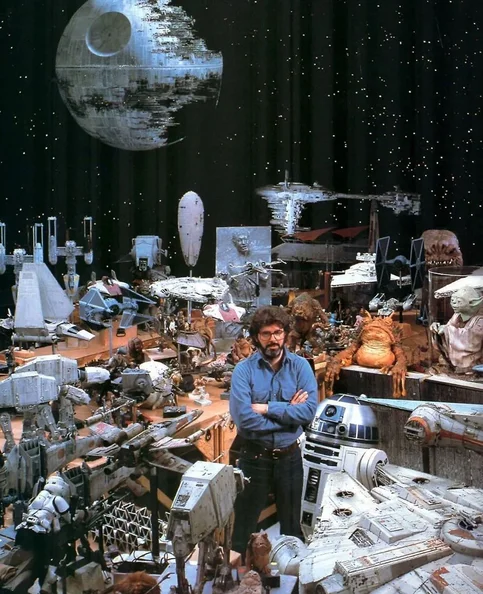
Favourites
- Favorite Color: Blue
- Favorite Food: Pizza
- Favorite Book: “Dune” by Frank Herbert
- Favorite Movie: “The Searchers” by John Ford
- Favorite Director: Stanley Kubrick
- Favorite Actor: Harrison Ford
- Favorite Car: Porsche 911
- Favorite Music Genre: Blues
- Favorite Season: Summer
- Favorite Vacation Spot: Hawaii
Controversies
- Special Editions: The release of the “Star Wars” Special Editions in 1997, which included changes to the original films, sparked controversy among fans who felt the alterations compromised the original vision.
- Prequel Trilogy: The “Star Wars” prequel trilogy (1999-2005) received mixed reviews, with many fans and critics criticizing the clunky dialogue, overuse of CGI, and perceived lack of depth in character development.
- podracing scene: The introduction of the Gungan Jar Jar Binks in “The Phantom Menace” was widely disliked, with many fans and critics finding the character annoying and poorly animated.
- Studio politics: Lucas’s departure from Warner Bros. and the creation of Lucasfilm led to tensions with the studio, which felt he was leveraging his success to gain more control over his projects.
- Gender and Diversity: There have been criticisms regarding the lack of diverse and strong female characters in Lucas’s films, particularly in the “Star Wars” franchise.
- Business practices: Some have raised concerns about Lucasfilm’s business practices, including allegations of unfair labor conditions and restrictions on the use of “Star Wars” intellectual property.
- Corporate influence: The sale of Lucasfilm to Disney in 2012 sparked debates about the corporate ownership of beloved franchises and the potential impact on creative integrity.
- Environmental impact: The massive scale of Lucasfilm’s production facilities and the use of CGI in his films have raised questions about their environmental footprint.
- Animal rights: There have been occasional concerns about the treatment of animals in his films, particularly in scenes involving trained animals.
- Political statements: Lucas has occasionally made controversial political statements, which have drawn mixed reactions from the public and media.
Control vs Chaos
George Lucas’s approach to filmmaking is characterized by a strong emphasis on control and meticulous planning. From the early stages of scriptwriting to the final editing process, Lucas is known for his attention to detail and desire to craft a cohesive and immersive experience for his audience. This control is evident in the elaborate world-building and technical precision of his films. However, this control has also been a source of controversy, particularly in the context of the “Star Wars” Special Editions and the prequel trilogy, where his insistence on making changes and using CGI has been criticized by some fans. Despite this, his ability to balance control with creative chaos has been a key factor in his success, allowing him to innovate and push the boundaries of what is possible in filmmaking.
Emotional Geography
George Lucas’s emotional landscape is deeply intertwined with his love for storytelling and his fascination with the human condition. His films often explore themes of heroism, redemption, and the struggle between good and evil. The emotional depth of his characters, from the idealistic Luke Skywalker to the complex Anakin Skywalker, reflects his own journey and the values he holds dear. Lucas’s emotional geography is grounded in his Midwestern roots and his early experiences with loss and uncertainty, which have shaped his perspective on life and art. His films serve as a conduit for these emotions, resonating with audiences on a profound level and creating a sense of connection and belonging.
FAQs
-
What is George Lucas best known for?
George Lucas is best known for creating the “Star Wars” and “Indiana Jones” franchises. His work on these iconic series has made him a household name and a legend in the entertainment industry.
-
Where was George Lucas born?
George Lucas was born on May 14, 1944, in Modesto, California.
-
What was George Lucas’s first feature film?
George Lucas’s first feature film was “THX 1138,” which was released in 1971. Although it received critical acclaim, it was not a commercial success.
-
How did “American Graffiti” impact George Lucas’s career?
“American Graffiti” (1973) was a critical and commercial success, earning George Lucas an Academy Award nomination. It helped establish him as a talented filmmaker and paved the way for his future projects.
-
What inspired George Lucas to create “Star Wars”?
George Lucas was inspired by a mix of science fiction literature, mythology, and his own experiences. He wanted to create a story that would captivate audiences and explore universal themes of good and evil.
-
What is the significance of Industrial Light & Magic (ILM)?
Industrial Light & Magic (ILM), founded by George Lucas in 1975, revolutionized the film industry with its groundbreaking special effects. ILM has been instrumental in creating the visual magic for numerous blockbusters.
-
What did George Lucas do after the initial “Star Wars” trilogy?
After the original “Star Wars” trilogy, George Lucas focused on other projects, including the “Indiana Jones” series. He also continued to develop new technologies and techniques at Lucasfilm and ILM.
-
What is the “Star Wars” prequel trilogy?
The “Star Wars” prequel trilogy consists of “The Phantom Menace” (1999), “Attack of the Clones” (2002), and “Revenge of the Sith” (2005). These films explore the events leading up to the original trilogy and the rise of the Galactic Empire.
-
Why did George Lucas sell Lucasfilm to Disney?
George Lucas decided to sell Lucasfilm to Disney in 2012 to ensure the continuation and expansion of the “Star Wars” franchise. He wanted to pass the torch to a company that could maintain the legacy and grow the brand.
-
What is the George Lucas Educational Foundation?
The George Lucas Educational Foundation, also known as Edutopia, is a nonprofit organization that aims to improve K-12 education by promoting innovative teaching methods and technologies.
-
What are some of George Lucas’s other interests besides filmmaking?
George Lucas has a wide range of interests, including technology, education, and philanthropy. He is also an avid car enthusiast and has a passion for music, particularly the blues.
-
What impact has George Lucas had on the film industry?
George Lucas has had a profound impact on the film industry through his pioneering work in special effects, his creation of iconic franchises, and his contributions to film technology. His influence can be seen in the way movies are made and experienced today.
-
What are some of the controversies surrounding George Lucas?
Some of the controversies surrounding George Lucas include the changes made to the original “Star Wars” films, the reception of the prequel trilogy, and issues related to gender and diversity in his films. There have also been debates about his business practices and the sale of Lucasfilm to Disney.
-
How has George Lucas contributed to education and philanthropy?
George Lucas has been a significant philanthropist, particularly in the realm of education. Through the George Lucas Educational Foundation, he has supported initiatives to improve teaching methods and educational technologies, aiming to make learning more engaging and effective for students.