
John Wayne, the quintessential Hollywood icon, is often synonymous with the rugged, tough-as-nails cowboy of the American West. Born Marion Robert Morrison on May 26, 1907, in Winterset, Iowa, Wayne’s journey from a small-town boy to a global superstar is a testament to his resilience, talent, and enduring charisma. He appeared in over 175 films, many of which have become classic examples of the Western genre. Wayne’s larger-than-life persona and his contributions to cinema have left an indelible mark on American culture and entertainment.
PERSONAL INFORMATION
| Name | John Wayne |
|---|---|
| Place of Birth | Winterset |
| Nationality | United States |
| Date of Birth | 26 May 1907 |
| Age at Death | 72 Years |
| Zodiac Sign | Gemini |
| Date of Death | 11 June 1979 |
| Signature |  |
| Birth Name | Marion Robert Morrison |
| Native Name | John Wayne |
| Languages Spoken | English |
| Residence | Glendale |
| Place of Death | Westwood |
| Gender | Male |
| Nickname | Duke |
| Native Language | English |
PHYSICAL STATISTICS
| Height (in centimeters) | 193 cm |
|---|---|
| Height (in meters) | 1.93 m |
| Height (in feet inches) | 6′ 3″ |
FAMILY
| Spouse | Esperanza Baur, Pilar Pallete, Josephine Wayne |
|---|---|
| Children | Patrick Wayne, Michael Wayne, Ethan Wayne, Marisa Wayne |
| Partner | Marlene Dietrich |
| Father | Clyde L. Morrison |
| Mother | Mary Brown |
EDUCATION
| Educated At | University of Southern California, Glendale High School |
|---|
CAREER
| Profession | film actor, actor, film director, film producer, screenwriter, American football player, television actor, director, producer, writer, film screenwriter |
|---|---|
| Awards Received | Presidential Medal of Freedom, Academy Award for Best Actor, Congressional Gold Medal, California Hall of Fame, Golden Plate Award, star on Hollywood Walk of Fame, Golden Globe Award for Best Actor – Motion Picture Drama, Golden Globe Cecil B. DeMille Award, Owen Wister Award, Golden Globe Awards, Academy Awards |
| Nominations | Academy Award for Best Actor, Academy Award for Best Actor, Academy Award for Best Picture |
| Record Label | RCA Records |
| Work Period Start | 1926 |
| Genre | Western film, war film, silent film, adventure film, action film, epic film, drama film, thriller film |
| Work Period End | 1979 |
| Field of Work | film, acting, film direction, film production |
SOCIAL MEDIA & LINKS
| IMDB ID | nm0000078 |
|---|---|
| Official Website | http://www.johnwayne.com |
| @JohnDukeWayne | |
| @johnwayneofficial | |
| Wikipedia | Wikipedia |
Cost of Becoming
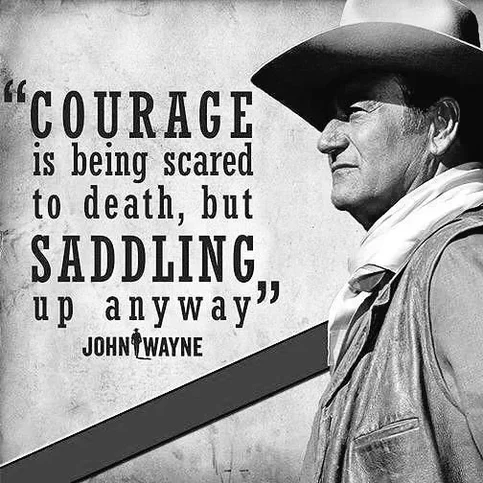
The cost of becoming John Wayne was steep and filled with determination and hard work. From his early days playing bit parts and working in prop departments, Wayne honed his craft and built a reputation for reliability and professionalism. His breakthrough role in the 1939 film Stagecoach, directed by John Ford, catapulted him to stardom. Wayne’s dedication to his craft, combined with his charismatic presence, allowed him to transition from a B-movie actor to one of the most recognized faces in the film industry. The relentless pursuit of his dreams and the willingness to take risks were crucial in shaping his legendary career.
Identity Before Fame
Prior to his rise to fame, Marion Robert Morrison lived a modest life. He attended the University of Southern California on a football scholarship, where he was known for his athletic prowess. However, a serious injury ended his football career, and he began working at Fox Studios to support himself. Wayne’s early roles were often uncredited, and he took on various jobs, including stunts and small parts, to stay in the industry. Despite the challenges, he never lost sight of his goal to become a successful actor.
Production Houses Associated With John Wayne
| Production House | Number of Movies |
|---|---|
| Monogram Pictures | 6 |
| Batjac Productions | 5 |
| Warner Bros. Pictures | 4 |
| Republic Pictures | 3 |
| Paramount Pictures | 3 |
| Paul Malvern Productions | 3 |
| Lone Star | 3 |
| Argosy Pictures | 2 |
| 20th Century Fox | 2 |
| Armada Productions | 1 |
Directors John Wayne Frequently Works With
| Director | Number of Movies |
|---|---|
| John Ford | 6 |
| Howard Hawks | 4 |
| John Wayne | 2 |
| Henry Hathaway | 2 |
| Robert N. Bradbury | 2 |
| George Stevens | 1 |
| Joe Dante | 1 |
| Michael Curtiz | 1 |
| Andrew V. McLaglen | 1 |
| John Farrow | 1 |
Movie Genres of John Wayne
| Genre | Number of Movies |
|---|---|
| Western | 104 |
| Drama | 76 |
| Documentary | 61 |
| Action | 51 |
| Romance | 40 |
| Adventure | 32 |
| Comedy | 29 |
| War | 24 |
| History | 14 |
| TV Movie | 13 |
Year-wise Movies of John Wayne
| Year | Number of Movies |
|---|---|
| 2026 | 3 |
| 2025 | 2 |
| 2024 | 2 |
| 2023 | 1 |
| 2022 | 2 |
| 2019 | 3 |
| 2017 | 1 |
| 2016 | 1 |
| 2013 | 2 |
| 2012 | 1 |
| 2010 | 2 |
| 2009 | 1 |
| 2002 | 1 |
| 2001 | 2 |
| 2000 | 1 |
Timeline
- 1907 – Born Marion Robert Morrison in Winterset, Iowa
- 1914 – Family moves to Glendale, California
- 1925 – Attends the University of Southern California on a football scholarship
- 1928 – Injury ends his football career; begins working at Fox Studios
- 1930 – Marries Josephine Saenz
- 1939 – Achieves breakthrough with Stagecoach
- 1941 – Begins service in the U.S. Navy during World War II (Congressional investigation)
- 1950 – Directs and stars in The Sands of Iwo Jima
- 1960 – Receives Best Actor Oscar for True Grit
- 1979 – Dies of stomach cancer in Los Angeles, California
Favourites
- Favorite role: The Searchers (1873) as Ethan Edwards
- Favorite director: John Ford
- Favorite film: The Searchers (1956)
- Favorite Western film: True Grit (1969)
- Favorite genre: Western
- Favorite actor: James Stewart
- Favorite actress: Maureen O’Hara
- Favorite hobby: Golf
- Favorite food: Steak
- Favorite drink: Jack Daniel’s whiskey
Controversies
- World War II draft evasion allegations and subsequent investigation by Congress
- Critical stance on the civil rights movement and the Black community
- Public opposition to the Vietnam War, despite his own service in World War II
- Comments on race and ethnicity, which were considered insensitive by modern standards
- Support for conservative political causes and figures, including Richard Nixon
- Public endorsement of the use of nuclear weapons against the Soviet Union
- Controversial statements about the treatment of Native Americans in his films
- Criticism of the counterculture movement and the hippie generation
- Statements on the role of women in society and films
- Controversial stance on environmental issues and conservation
Control vs Chaos
John Wayne’s life and career were marked by a constant struggle between control and chaos. On one hand, he was a meticulous professional who demanded the best from himself and those around him. His on-screen persona was one of unyielding control and authority, embodying the ideal of the stoic, reliable hero. Off-screen, however, Wayne often found himself in the midst of chaos, whether it was the tumultuous early days of his career, personal struggles, or the political controversies that followed him. This duality contributed to his complex and enduring legacy, making him both a revered icon and a figure of controversy.
Emotional Geography
The emotional geography of John Wayne’s life was a vast landscape of highs and lows, shaped by his deep-seated values and the challenges he faced. His early years were marked by a strong sense of family and community, which provided a foundation for his later success. The transition to Hollywood and the pressures of fame brought both exhilaration and stress. Wayne’s relationships, particularly with his family and friends, were a source of strength and comfort, but also a source of tension and conflict. His films often explored themes of duty, loyalty, and sacrifice, reflecting his own emotional journey and the complex emotions that defined his life.

FAQs
-
Where was John Wayne born?
John Wayne was born in Winterset, Iowa, on May 26, 1907.
-
What was John Wayne’s real name?
John Wayne’s real name was Marion Robert Morrison.
-
What was John Wayne’s most famous role?
One of John Wayne’s most famous roles is as the gunslinger Ringo Kid in Stagecoach (1939).
-
How many films did John Wayne appear in?
John Wayne appeared in over 175 films throughout his career.
-
Did John Wayne serve in World War II?
John Wayne did not serve in World War II, although he was investigated by Congress for draft evasion. He supported the war effort through his films and other activities.
-
What was John Wayne’s political stance?
John Wayne was known for his conservative political views and supported Republican candidates and causes.
-
What was John Wayne’s favorite hobby?
John Wayne’s favorite hobby was golf.
-
What awards did John Wayne win?
John Wayne won an Academy Award for Best Actor for his role in True Grit (1969).
-
What was John Wayne’s most successful film?
The Alamo (1960) and The Green Berets (1968) were among John Wayne’s most commercially successful films.
-
What was John Wayne’s relationship with directors?
John Wayne had a long and fruitful relationship with director John Ford, who directed many of his most famous films.
-
Where did John Wayne live most of his life?
John Wayne lived in Southern California for most of his life, particularly in the Los Angeles area.
-
What was John Wayne’s net worth at the time of his death?
t the time of his death, John Wayne’s net worth was estimated to be around $30 million.
-
What was John Wayne’s legacy?
John Wayne’s legacy is that of a Hollywood icon and a symbol of American values, particularly those associated with the Western genre. His films continue to be celebrated for their timeless appeal and cultural significance.