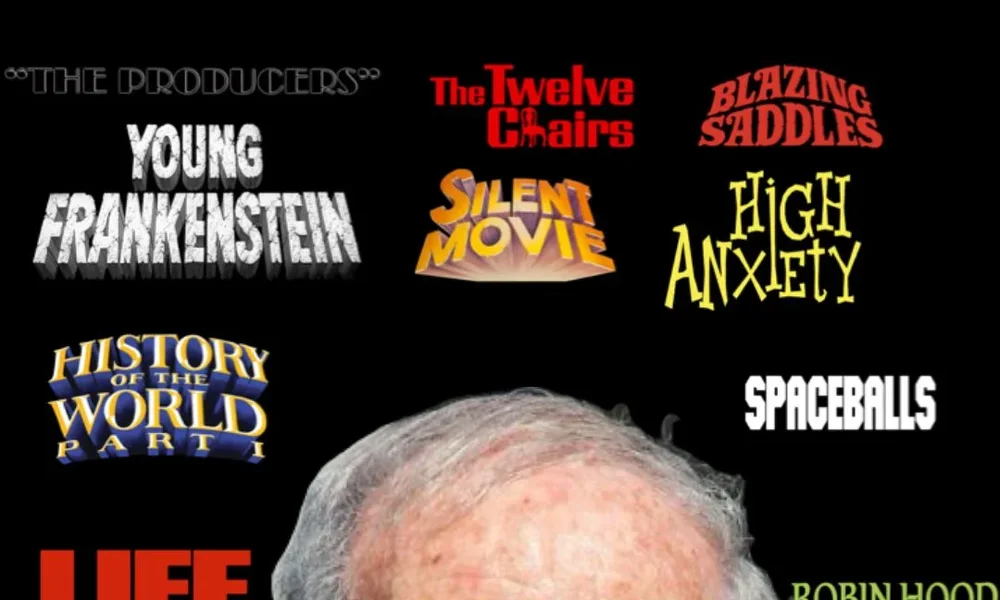
Mel Brooks is a name synonymous with comedy, satire, and irreverence. Born in Brooklyn, New York, on June 28, 1926, Melvin James Brooks has left an indelible mark on the world of entertainment. His career spans over six decades, during which he has become one of the most celebrated and influential filmmakers, writers, and comedians of the 20th century. Known for his sharp wit, cultural commentary, and boundary-pushing humor, Brooks has crafted a legacy that continues to influence generations of comedians and filmmakers. His works, such as “The Producers,” “Blazing Saddles,” and “Young Frankenstein,” are not only hilarious but also deeply insightful, often challenging societal norms and expectations.
PERSONAL INFORMATION
| Name | Mel Brooks |
|---|---|
| Nationality | United States |
| Place of Birth | Brownsville |
| Date of Birth | 28 June 1926 |
| Age | 99 Years |
| Zodiac Sign | Cancer |
| Residence | Fire Island, Brooklyn |
| Languages Spoken | English |
| Birth Name | Melvin Kaminsky |
| Native Name | Mel Brooks |
| Gender | Male |
| Native Language | English |
FAMILY
| Spouse | Anne Bancroft |
|---|---|
| Children | Max Brooks |
| Mother | Kate Kaminsky |
| Father | Max James Kaminsky |
EDUCATION
| Educated At | Abraham Lincoln High School, Virginia Military Institute, Brooklyn College |
|---|
CAREER
| Profession | actor, film actor, film director, screenwriter, film producer, composer, voice actor, writer, theatrical producer, military personnel, television producer, lyricist, television actor, journalist, librettist, stage actor, director, playwright, comedian, cinematographer, songwriter |
|---|---|
| Awards Received | Primetime Emmy Award for Outstanding Writing for a Variety Series, Grammy Award for Best Music Film, Academy Award for Best Writing, Original Screenplay, Primetime Emmy Award for Outstanding Writing for a Variety Series, Writers Guild of America Award for Best Original Screenplay, Nebula Award for Best Script, Saturn Award for Best Director, Grammy Award for Best Comedy Album, Grammy Hall of Fame, Tony Award for Best Original Score, Tony Award for Best Book of a Musical, Grammy Award for Best Musical Theater Album, Drama Desk Award for Outstanding Book of a Musical, Grammy Award for Best Music Film, Drama Desk Award for Outstanding Lyrics, Drama Desk Award for Outstanding Musical, Drama Desk Award for Outstanding Book of a Musical, Drama Desk Award for Outstanding Musical, Laurel Award for Screenwriting Achievement, Laurence Olivier Award for Best New Musical, Kennedy Center Honors, AFI Life Achievement Award, American Campaign Medal, European-African-Middle Eastern Campaign Medal, World War II Victory Medal, Primetime Emmy Award for Outstanding Guest Actor in a Comedy Series, Primetime Emmy Award for Outstanding Guest Actor in a Comedy Series, Primetime Emmy Award for Outstanding Guest Actor in a Comedy Series, star on Hollywood Walk of Fame, Hugo Award for Best Dramatic Presentation, Academy Honorary Award, Peabody Awards |
| Nominations | Primetime Emmy Award for Outstanding Writing for a Comedy Series, Primetime Emmy Award for Outstanding Writing for a Comedy Series, Golden Globe Award for Best Screenplay, Academy Award for Best Writing, Original Screenplay, Primetime Emmy Award for Outstanding Writing for a Comedy Series, Writers Guild of America Award for Best Original Screenplay, Primetime Emmy Award for Outstanding Writing for a Variety Series, Nebula Award for Best Script, Academy Award for Best Original Song, Academy Award for Best Writing, Adapted Screenplay, Hugo Award for Best Dramatic Presentation, Golden Globe Award for Best Motion Picture – Musical or Comedy, Golden Globe Award for Best Actor – Motion Picture Musical or Comedy, Primetime Emmy Award for Outstanding Guest Actor in a Comedy Series, Primetime Emmy Award for Outstanding Guest Actor in a Comedy Series, Grammy Award for Best Comedy Album, Primetime Emmy Award for Outstanding Guest Actor in a Comedy Series, Grammy Award for Best Musical Theater Album, Grammy Award for Best Music Film, Drama Desk Award for Outstanding Book of a Musical, Drama Desk Award for Outstanding Musical, Drama Desk Award for Outstanding Lyrics, Golden Globe Award for Best Original Song, Golden Globe Award for Best Original Song, Laurence Olivier Award for Best New Musical, Daytime Emmy Award for Outstanding Performer in an Animated Program, Golden Globe Award for Best Motion Picture – Musical or Comedy, Grammy Award for Best Song Written for Visual Media, Grammy Award for Best Musical Theater Album, Drama Desk Award for Outstanding Lyrics, Primetime Emmy Award for Outstanding Variety, Music, or Comedy Special |
| Member Of | American Academy of Arts and Sciences, Writers Guild of America West |
| Work Period Start | 1949 |
| Field of Work | cinematography |
| Genre | observational comedy, farce, parody, musical comedy, satire, sketch comedy, deadpan, physical comedy |
| Notable Works | The Producers, The Twelve Chairs, Blazing Saddles, Young Frankenstein, Silent Movie, High Anxiety, History of the World, Part I, Spaceballs, Life Stinks, Robin Hood: Men in Tights, Dracula: Dead and Loving It |
SOCIAL MEDIA & LINKS
| IMDB ID | nm0000316 |
|---|---|
| Official Website | http://www.melbrooks.com |
| @MelBrooks | |
| YouTube Channel | UCaAxsyHkLwenzwpNb_9XzgQ |
| MelBrooks | |
| Wikipedia | Wikipedia |
Cost of Becoming
Becoming Mel Brooks was a journey marked by perseverance and a relentless drive to create. Growing up in a modest Brooklyn household, Brooks was surrounded by the hardships of the Great Depression and the challenges of being a son of Jewish immigrants. Despite these obstacles, his passion for comedy and storytelling propelled him forward. His early days as a comedian in the Catskills and his work on the writing staff of various TV shows, including “Your Show of Shows,” laid the foundation for his future success. The cost was significant, involving long hours, constant rejection, and the emotional toll of trying to break into a highly competitive industry. However, his unwavering commitment to his craft and his unique vision ultimately paid off, earning him a place in the pantheon of comedy greats.

Identity Before Fame
Before he became the legendary Mel Brooks, he was Melvin James Brooks, a young man from Brooklyn with a penchant for laughter. His early life was shaped by the immigrant experience and the vibrant culture of his hometown. Brooks attended Abraham Lincoln High School, where he honed his skills in music and comedy. He played the clarinet and participated in local bands, but it was his early forays into stand-up comedy that hinted at his future path. After serving in the U.S. Army during World War II, Brooks returned to New York with a renewed sense of purpose. He worked various jobs, including as a typist and a stand-up comedian in the Catskills, gradually building the skills and confidence that would lead to his breakthrough in the entertainment industry.
Production Houses Associated With Mel Brooks
| Production House | Number of Movies |
|---|---|
| Brooksfilms | 6 |
| 20th Century Fox | 4 |
| Crossbow Productions | 4 |
| 20th Century Fox Home Entertainment | 3 |
| Metro-Goldwyn-Mayer | 2 |
| Thirtieth Century Wolf | 2 |
| Gaumont | 2 |
| Trailer Park Productions | 2 |
| A+E Studios | 1 |
| Silvio Berlusconi Communications | 1 |
Directors Mel Brooks Frequently Works With
| Director | Number of Movies |
|---|---|
| Mel Brooks | 9 |
| Ezio Greggio | 2 |
| Richard Brown | 1 |
| Penelope Spheeris | 1 |
| James Frawley | 1 |
| Alan Johnson | 1 |
| Chris Wedge | 1 |
| Matthew Buzzell | 1 |
| Kel Symons | 1 |
| Toby Keeler | 1 |
Movie Genres of Mel Brooks
| Genre | Number of Movies |
|---|---|
| Comedy | 56 |
| Documentary | 53 |
| Family | 21 |
| Animation | 17 |
| Adventure | 9 |
| TV Movie | 8 |
| Music | 6 |
| Fantasy | 5 |
| Science Fiction | 4 |
| Romance | 3 |
Year-wise Movies of Mel Brooks
| Year | Number of Movies |
|---|---|
| 2027 | 1 |
| 2026 | 1 |
| 2025 | 5 |
| 2024 | 2 |
| 2023 | 2 |
| 2022 | 1 |
| 2021 | 2 |
| 2019 | 2 |
| 2018 | 4 |
| 2017 | 4 |
| 2016 | 4 |
| 2015 | 2 |
| 2014 | 2 |
| 2013 | 2 |
| 2012 | 3 |
Timeline
- 1926: Born in Brooklyn, New York, as Melvin James Brooks.
- 1938-1944: Attends Abraham Lincoln High School in Brooklyn.
- 1944-1945: Serves in the U.S. Army during World War II.
- 1945-1950: Performs stand-up comedy in the Catskills and works as a writer for “Your Show of Shows.”
- 1953: Joins the writing staff of “Your Show of Shows,” working alongside Sid Caesar.
- 1967: Co-writes and co-stars in “The Producers,” which wins the Academy Award for Best Original Screenplay.
- 1974: Directs and stars in “Blazing Saddles,” a seminal Western comedy.
- 1974: Directs “Young Frankenstein,” which becomes a cult classic.
- 1987: Produces and directs “Spaceballs,” a science fiction comedy parody.
- 2001: Wins the Tony Award for Best Musical for “The Producers,” adapted from his 1967 film.

Favourites
- Movie: “The Producers” (1967 and 2005 Broadway musical)
- TV Show: “Your Show of Shows” (1950-1954)
- Book: “Finnegans Wake” by James Joyce
- Musician: Elvis Presley
- Comedian: Sid Caesar
- Food: Matzo ball soup
- Director: Alfred Hitchcock
- Actress: Anne Bancroft
- Actor: Gene Wilder
- City: New York City
Controversies
- Anti-Semitic Allegations: Brooks has been accused of using Jewish stereotypes in his films, particularly in “The Producers.” However, he has maintained that his humor is a form of cultural commentary and not meant to be offensive.
- Racial Humor: “Blazing Saddles” faced criticism for its use of racial stereotypes and language, but Brooks argued that the film was a satire of racism and intended to highlight the absurdity of such prejudices.
- Political Satire: His films and stage productions often contain sharp political commentary, which has occasionally drawn ire from conservative groups.
- Religious Jokes: Brooks’ comedy frequently includes jokes about religion, which has led to complaints from religious organizations. However, he has defended his work as a means of challenging the sacred cows of society.
- Sexual Content: Some of his films, such as “Springtime for Hitler” and “The Congresswomen,” have been criticized for their sexual content and innuendo, although Brooks maintains that this is part of the comedic territory.
- Personal Life: Brooks has been involved in several high-profile relationships and marriages, which have sometimes been the subject of media scrutiny.
- Financial Disputes: There have been legal battles over the profits from “The Producers” musical, which have highlighted the complexities of the entertainment industry.
- Comedy at the Expense of Tragedy: Brooks’ approach to comedy, which often includes making light of tragic or serious events, has been a point of contention. However, he has argued that humor can be a powerful tool for coping with and commenting on difficult subjects.
- Commercial Success vs. Artistic Integrity: Some critics have argued that Brooks’ later works, particularly the stage musical adaptations, prioritize commercial success over artistic integrity. However, Brooks maintains that his goal is to entertain and provoke thought, regardless of the medium.
- Adaptations and Remakes: The remakes and adaptations of his original works, such as the Broadway musical “The Producers,” have sometimes been met with mixed reviews, with some fans feeling that the new versions lack the raw energy and spontaneity of the originals.
Control vs Chaos
Throughout his career, Mel Brooks has walked the tightrope between control and chaos. His films and productions are meticulously crafted, with a keen eye for detail and a deep understanding of the craft of storytelling. However, he has also embraced the unpredictable nature of live performances and the improvisational spirit of comedy. This duality is evident in his work, where the carefully constructed narratives and punchlines are often interrupted by moments of sheer absurdity and spontaneous wit. Brooks’ ability to blend control and chaos has not only made his works more engaging but has also allowed him to push the boundaries of what is possible in comedy and film.
Emotional Geography
Mel Brooks’ emotional geography is a rich tapestry of experiences, influences, and personal reflections. His early life in Brooklyn, the cultural melting pot of his neighborhood, and the immigrant experience have all deeply influenced his worldview. The humor and satire in his work often draw from these formative experiences, blending the personal with the universal. His time in the military during World War II and his early years as a struggling comedian have also shaped his resilience and his ability to find laughter in adversity. Brooks’ emotional landscape is characterized by a deep appreciation for the absurdity of life and a belief in the power of laughter to heal and connect people across different backgrounds and experiences.
FAQs
-
Who is Mel Brooks?
Mel Brooks is a renowned American filmmaker, writer, and comedian, known for his groundbreaking films such as “The Producers,” “Blazing Saddles,” and “Young Frankenstein.” He has won numerous awards, including an Oscar, a Tony, and an Emmy, cementing his status as a comedy legend.
-
When and where was Mel Brooks born?
Melvin James Brooks was born on June 28, 1926, in Brooklyn, New York.
-
What is Mel Brooks’ most famous film?
One of Mel Brooks’ most famous films is “The Producers,” which he wrote and directed in 1967. The film won him an Academy Award for Best Original Screenplay and was later adapted into a successful Broadway musical in 2001.
-
What is “Blazing Saddles” about?
“Blazing Saddles” is a satirical Western comedy film released in 1974. The film parodies the Western genre and addresses issues of race and prejudice through its humor. It stars Cleavon Little as the first Black sheriff of a predominantly white town and Gene Wilder as the unconventional train robber, The Waco Kid.
-
What is Mel Brooks’ writing process like?
Mel Brooks is known for his collaborative writing process. He often works with a team of writers to develop and refine his scripts, drawing on their diverse perspectives and talents. This approach has contributed to the sharp, multi-layered humor found in his works.
-
Has Mel Brooks been involved in any legal disputes?
Yes, Brooks has been involved in legal battles, particularly over the profits from the Broadway musical adaptation of “The Producers.” These disputes highlight the complex financial and creative challenges in the entertainment industry.
-
What is Mel Brooks’ approach to comedy?
Mel Brooks’ approach to comedy is characterized by his willingness to tackle taboo subjects and his use of satire and parody. He believes that humor can be a powerful tool for social commentary and for challenging societal norms.
-
What is Mel Brooks’ favorite film?
While it’s subjective, Mel Brooks has often cited “The Producers” as one of his favorite films, both the original 1967 version and the 2005 remake. The film holds a special place in his heart due to its critical and commercial success.
-
What is Mel Brooks’ relationship with Gene Wilder?
Mel Brooks and Gene Wilder had a long and fruitful collaboration, working together on several films including “The Producers,” “Blazing Saddles,” and “Young Frankenstein.” Their on-screen chemistry and mutual respect for each other’s talents made them a dynamic duo in comedy.
-
What is the legacy of Mel Brooks?
Mel Brooks’ legacy is one of groundbreaking comedy and storytelling. His films and productions have influenced generations of comedians and filmmakers, and his ability to blend humor with social commentary has made him a lasting figure in the entertainment industry.
-
What is Mel Brooks’ take on political humor?
Mel Brooks is known for his sharp political humor, often using satire to comment on contemporary issues. He believes that comedy has the power to expose hypocrisy and challenge authority, making it a vital part of the democratic process.
-
Has Mel Brooks won any major awards?
Yes, Mel Brooks has won numerous awards throughout his career. He won an Academy Award for Best Original Screenplay for “The Producers” in 1967, a Tony Award for Best Musical for the stage adaptation of “The Producers” in 2001, and multiple Emmy Awards for his television work.
-
What is Mel Brooks’ view on the future of comedy?
Mel Brooks remains optimistic about the future of comedy, believing that as long as there are things to laugh at, there will always be a place for humor. He encourages young comedians to be bold, creative, and unafraid to push boundaries.