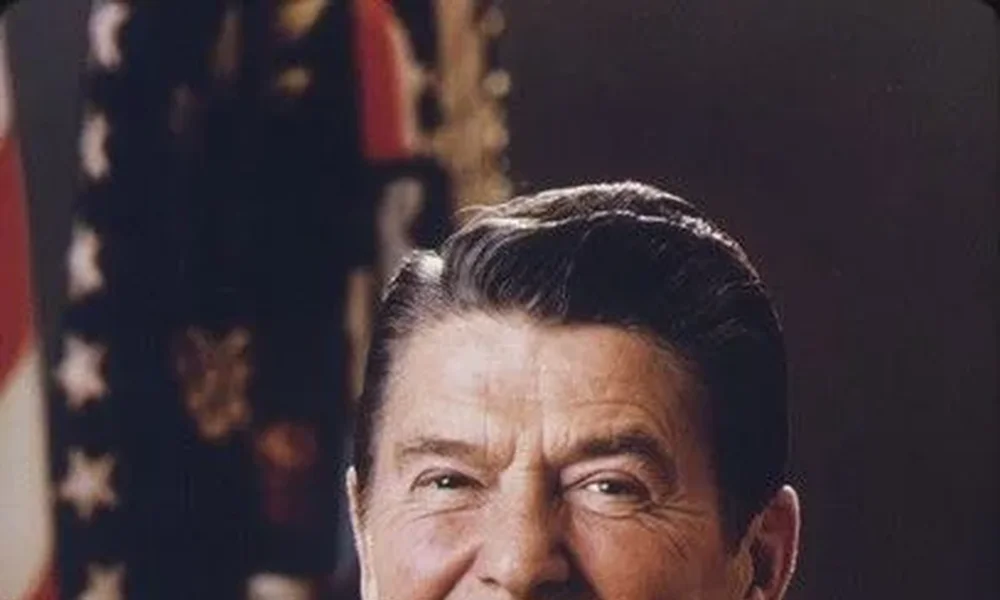
Ronald Reagan, the 40th President of the United States, was a man of many talents and a significant figure in American political history. Born into a modest family in Illinois, Reagan’s journey from actor to governor to president is a testament to his resilience and charisma. His presidency is often remembered for its transformative impact on American policy, both domestically and internationally. Reagan’s conservative principles, his stellar communication skills, and his unwavering optimism resonated with many Americans, earning him the nickname “The Great Communicator.” His economic policies, known as Reaganomics, aimed to stimulate the economy through tax cuts and deregulation. His foreign policy, particularly his stance against the Soviet Union, played a crucial role in the end of the Cold War. Reagan’s legacy continues to influence American politics and is a subject of both admiration and critique.
PERSONAL INFORMATION
| Name | Ronald Reagan |
|---|---|
| Nationality | United States |
| Place of Death | Bel Air |
| Place of Birth | Tampico, Birthplace of Ronald Reagan |
| Date of Birth | 06 February 1911 |
| Age at Death | 93 Years |
| Zodiac Sign | Aquarius |
| Date of Death | 05 June 2004 |
| Religion | Presbyterianism, Restorationism, Christian Church (Disciples of Christ) |
| Signature |  |
| Residence | Rancho del Cielo, Ronald Reagan Boyhood Home, Bel Air |
| Native Name | Ronald Wilson Reagan |
| Languages Spoken | American English, English |
| Native Language | American English |
| Birth Name | Ronald Wilson Reagan |
| Ethnicity | white people |
| Gender | Male |
| Nickname | Dutch, The Gipper, The Great Communicator |
PHYSICAL STATISTICS
| Height (in centimeters) | 185 cm |
|---|---|
| Height (in meters) | 1.85 m |
| Height (in feet inches) | 6′ 0″ |
| Eye Color | Blue |
FAMILY
| Children | Maureen Reagan, Patti Davis, Ron Reagan, Christine Reagan, Michael Reagan |
|---|---|
| Father | Jack Reagan |
| Mother | Nelle Wilson Reagan |
| Siblings | Neil Reagan |
| Spouse | Jane Wyman, Nancy Reagan |
EDUCATION
| Educated At | Dixon High School, Eureka College |
|---|
CAREER
| Profession | television actor, film actor, politician, autobiographer, character actor, screenwriter, military officer, actor, trade unionist, announcer, statesperson, voice actor, diarist, lifeguard, anti-communist, game show host, art collector |
|---|---|
| Awards Received | honorary citizen of Berlin, Knight Grand Cross of the Order of the Bath, Order of the White Eagle, Collar of the Order of the White Lion, Francis Boyer Award, Presidential Medal of Freedom, Congressional Gold Medal, California Hall of Fame, Doublespeak Award, Theodore Roosevelt Award, Horatio Alger Award, Labor Hall of Honor, star on Hollywood Walk of Fame, Grand Cross 1st class of the Order of Merit of the Federal Republic of Germany, Grand Cross of the Order of Merit of the Republic of Poland, honorary doctorate of the Weizmann Institute of Science, Doublespeak Award, Grand Cordon of the Supreme Order of the Chrysanthemum, Armed Forces Reserve Medal, American Defense Service Medal, American Campaign Medal, World War II Victory Medal, Order of the White Lion, Order of the Chrysanthemum, Order pro Merito Melitensi, Order of Merit of the Republic of Poland, honorary citizen of Vilnius, honorary citizen of Gdańsk |
| Member Of | American Legion, Screen Actors Guild, Tau Kappa Epsilon |
| Employer | Warner Bros. |
| Work Period Start | 1937-06-01 |
| Notable Works | Tear down this wall! |
SOCIAL MEDIA & LINKS
| IMDB ID | nm0001654 |
|---|---|
| Official Website | http://www.whitehouse.gov/about/presidents/ronaldreagan/, https://whitehouse.gov/about-the-white-house/presidents/ronald-reagan/ |
| RonaldReagan | |
| Wikipedia | Wikipedia |
Cost of becoming
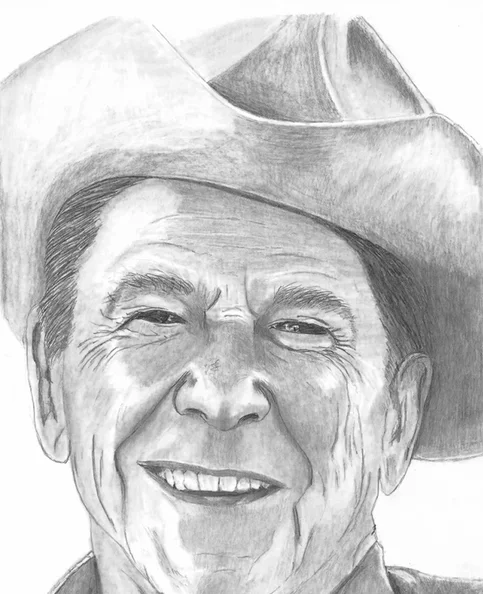
Ronald Reagan’s path to the presidency was not an easy one. He faced numerous challenges and setbacks throughout his life, both personal and professional. His early career as an actor was marked by financial struggles and the need to support his family. Later, as he entered politics, Reagan endured criticism and opposition from political adversaries who questioned his policies and leadership. The cost of becoming one of the most influential leaders in American history was significant, requiring tremendous personal sacrifice, relentless determination, and a deep commitment to his principles. Reagan’s ability to persevere through these challenges and maintain his vision ultimately defined his legacy as a statesman.
Identity before fame
Before his rise to national fame, Ronald Reagan was a dedicated and passionate individual. Born on February 6, 1911, in Tampico, Illinois, he grew up in a working-class family. His father, Jack Reagan, was a shoe salesman, and his mother, Nelle Wilson Reagan, was a homemaker. Reagan’s early years were shaped by the values of hard work, honesty, and community service. He was an active member of the Boy Scouts and participated in various sports and school activities. After graduating from high school, Reagan attended Eureka College, where he majored in economics and sociology. His experiences in college, including his involvement in student government and theater, helped cultivate his leadership and communication skills, laying the foundation for his future success.
Production Houses Associated With Ronald Reagan
| Production House | Number of Movies |
|---|---|
| Warner Bros. Pictures | 7 |
| Vox Populi | 2 |
| First National Pictures | 2 |
| Assembly Line Entertainment | 1 |
| Film Shows Inc. | 1 |
| SpeechWorks (SoundWorks USA, Inc.) | 1 |
| Lawrence Bender Productions | 1 |
| Participant | 1 |
| Sandollar Productions | 1 |
| New Yorker Films | 1 |
Directors Ronald Reagan Frequently Works With
| Director | Number of Movies |
|---|---|
| Michael Curtiz | 2 |
| Janek Ambros | 1 |
| Bill Weber | 1 |
| David Weissman | 1 |
| Davis Guggenheim | 1 |
| Jeffrey Friedman | 1 |
| Rob Epstein | 1 |
| Robert Greenwald | 1 |
| Jacopo Brogi | 1 |
| Dirk Laabs | 1 |
Movie Genres of Ronald Reagan
| Genre | Number of Movies |
|---|---|
| Documentary | 231 |
| Comedy | 51 |
| Drama | 48 |
| History | 42 |
| TV Movie | 24 |
| Crime | 22 |
| Romance | 17 |
| War | 16 |
| Music | 15 |
| Action | 9 |
Year-wise Movies of Ronald Reagan
| Year | Number of Movies |
|---|---|
| 2026 | 1 |
| 2025 | 5 |
| 2024 | 11 |
| 2023 | 5 |
| 2022 | 6 |
| 2021 | 6 |
| 2020 | 14 |
| 2019 | 12 |
| 2018 | 12 |
| 2017 | 9 |
| 2016 | 8 |
| 2015 | 7 |
| 2014 | 1 |
| 2013 | 8 |
| 2012 | 8 |
Timeline
- 1911: Ronald Wilson Reagan is born in Tampico, Illinois.
- 1932: Graduates from Eureka College with a degree in economics and sociology.
- 1937: Begins his career as a radio sports commentator in Des Moines, Iowa.
- 1940: Moves to Hollywood and signs a contract with Warner Brothers, marking the start of his acting career.
- 1947: Elected as the president of the Screen Actors Guild, a position he held for six years.
- 1952: Marries Nancy Davis, his second wife.
- 1966: Elected as the 33rd Governor of California, serving two terms.
- 1980: Wins the Republican nomination and is elected as the 40th President of the United States.
- 1986: Signs the Tax Reform Act, a major piece of legislation that simplifies the tax code.
- 1989: Completes his second term as President and leaves office with high approval ratings.
Favourites
- Books: “The Brothers Karamazov” by Fyodor Dostoevsky, “The Conquest of Happiness” by Bertrand Russell
- Music: “The Old Man and the Sea” by Ernest Hemingway, “The Adventures of Huckleberry Finn” by Mark Twain
- Movies: “Kings Row,” “Knute Rockne, All American,” “Hellcats of the Navy”
- Sports: Football, Baseball, Basketball
- Hobbies: Painting, Riding, Writing
- Food: Meat, Salad, Ice Cream
- Drinks: Scotch, Coffee, Water
- Places to visit: California, Ireland, Washington D.C.
- Travel destinations: Europe, Mexico, Canada
- Leisure activities: Fishing, Hiking, Reading
Controversies
- Iran-Contra Affair: The Reagan administration was involved in a covert operation to sell arms to Iran in exchange for the release of American hostages and to fund the Contras in Nicaragua, leading to political scandal and investigation.
- Reaganomics and Income Inequality: Critics argued that Reagan’s economic policies, including tax cuts for the wealthy and deregulation, widened the income gap between the rich and the poor.
- AIDS Crisis Response: Reagan’s administration was criticized for its slow and inadequate response to the AIDS epidemic, which disproportionately affected the gay community.
- Strategic Defense Initiative (SDI): Known as “Star Wars,” this ambitious missile defense program was criticized for being technologically infeasible and potentially destabilizing.
- Reagan’s Role in the PATCO Strike: Reagan’s decision to fire striking air traffic controllers in 1981 was seen as a significant blow to labor unions and solidified his reputation as a tough negotiator.
- Central American Policy: Reagan’s support for right-wing governments and anti-communist insurgencies in countries like El Salvador and Honduras was controversial and led to accusations of human rights abuses.
- Appointments to the Supreme Court: Reagan’s nominations of justices like Sandra Day O’Connor and Antonin Scalia were praised by conservatives but criticized by liberals for their conservative leanings.
- Environmental Policies: Reagan’s administration rolled back environmental regulations and weakened the Environmental Protection Agency, leading to criticism from environmental groups.
- Handling of the Savings and Loan Crisis: Reagan’s deregulation of the savings and loan industry is seen by some as a contributing factor to the financial crisis of the late 1980s.
- Racial Issues: Reagan’s policies and rhetoric were sometimes accused of being insensitive or indifferent to racial issues, particularly his opposition to affirmative action and his support for states’ rights.
Control vs Chaos
Ronald Reagan’s presidency was marked by a clear vision of order and control, especially in the face of what he perceived as chaos in both domestic and international affairs. His administration’s economic policies sought to bring stability and growth through tax cuts and deregulation, aiming to stimulate the private sector and reduce the burden on businesses and individuals. In foreign policy, Reagan’s confrontational stance against the Soviet Union and his support for anti-communist movements around the world were driven by a desire to contain and ultimately defeat what he saw as a totalitarian threat. Reagan’s ability to balance control and chaos was a defining characteristic of his leadership, often exemplified by his calm and decisive demeanor in times of crisis.
Emotional Geography
Ronald Reagan’s emotional geography was deeply rooted in his Midwestern upbringing and his experiences as an actor and politician. His early life in Illinois instilled in him a sense of community, hard work, and personal responsibility, values that he carried throughout his career. Reagan’s time in Hollywood not only honed his communication skills but also exposed him to a diverse range of people and ideas, shaping his worldview. His transition to politics in California and his eventual rise to the presidency were driven by a strong sense of purpose and a belief in the power of positive thinking. Reagan’s emotional landscape was characterized by a blend of optimism, resilience, and a deep commitment to the principles of freedom and democracy.
FAQs
-
What were Ronald Reagan’s most significant achievements as President?
Reagan’s most significant achievements include the implementation of Reaganomics, which aimed to stimulate the economy through tax cuts and deregulation, and his foreign policy, particularly his role in ending the Cold War through negotiations with the Soviet Union. He also signed the Tax Reform Act of 1986, which simplified the tax code.
-
How did Ronald Reagan become involved in politics?
Reagan’s involvement in politics began during his time as the president of the Screen Actors Guild, where he advocated for actors’ rights and became increasingly involved in political issues. His political views evolved, and he eventually ran for governor of California in 1966, winning the election and serving two terms.
-
What is Reaganomics?
Reaganomics is the term used to describe the economic policies of Ronald Reagan, which included supply-side economics, characterized by tax cuts, reduced government regulation, and a focus on stimulating private sector growth. The goal was to reduce the burden on businesses and individuals, encouraging investment and economic expansion.
-
What was Ronald Reagan’s stance on the Cold War?
Reagan took a strong stance against the Soviet Union, viewing it as a threat to global peace and freedom. His policies included a buildup of military strength, increased support for anti-communist movements, and diplomatic efforts to negotiate arms reductions and improve relations. His famous “evil empire” speech highlighted his commitment to standing against communism.
-
How did Ronald Reagan handle the AIDS crisis?
Reagan’s response to the AIDS crisis was widely criticized for being slow and inadequate. The administration did not address the issue with the urgency and resources that many believed were necessary, leading to accusations of negligence and insensitivity, particularly towards the gay community.
-
What role did Nancy Reagan play in Ronald Reagan’s presidency?
Nancy Reagan was a significant influence on Ronald Reagan’s presidency, providing emotional support and advice. She was particularly involved in the “Just Say No” anti-drug campaign and played a role in shaping the First Lady’s office. Her close relationship with her husband and her influence on his decisions were well-documented.
-
How did Ronald Reagan’s early career as an actor influence his political success?
Reagan’s early career as an actor helped him develop exceptional communication and public speaking skills, which were crucial in his political career. His ability to connect with audiences and convey complex ideas in a clear and compelling manner was a significant asset during his political campaigns and presidency.
-
What were some of the challenges Ronald Reagan faced during his presidency?
Reagan faced numerous challenges, including economic difficulties such as high inflation and unemployment, political scandals like the Iran-Contra Affair, and international crises such as the Soviet invasion of Afghanistan and the ongoing Cold War. He also dealt with domestic issues like the AIDS epidemic and the savings and loan crisis.
-
How did Ronald Reagan’s legacy influence American politics?
Reagan’s legacy has had a lasting impact on American politics, particularly on the Republican Party. His conservative principles, including support for smaller government, lower taxes, and strong defense, continue to shape the party’s platform. Reagan’s approach to leadership and his communication skills are often cited as models for effective political leadership.
-
What was Ronald Reagan’s stance on environmental issues?
Reagan’s administration took a more laissez-faire approach to environmental issues, often prioritizing economic growth over environmental regulation. His administration rolled back some environmental protections and reduced funding for the Environmental Protection Agency, leading to criticism from environmental groups.
-
What were some of Ronald Reagan’s notable speeches?
Some of Reagan’s most notable speeches include his “A Time for Choosing” speech in 1964, which launched his political career, his “Tear Down This Wall” speech in 1987, which called for the dismantling of the Berlin Wall, and his “Evil Empire” speech in 1983, which firmly positioned the United States against the Soviet Union.
-
How did Ronald Reagan’s presidency impact the economy?
Reagan’s economic policies, known as Reaganomics, had a significant impact on the U.S. economy. His tax cuts and deregulation helped stimulate economic growth and reduce inflation. However, these policies also contributed to a significant increase in the national debt, and the benefits were unevenly distributed, with some critics arguing that they primarily benefited the wealthy.
-
What were Ronald Reagan’s views on social issues?
Reagan held conservative views on social issues, including opposition to abortion and support for school prayer. He was a strong supporter of traditional family values and often emphasized the importance of personal responsibility and self-reliance. His administration’s policies reflected these conservative principles, although they were sometimes met with opposition from liberal groups.