Timothy Leary, an iconic figure in the counterculture movement of the 1960s, was a psychologist, writer, and philosopher known for his advocacy of psychedelic drugs. Born on October 22, 1920, in Springfield, Massachusetts, Leary’s life and work have left an indelible mark on the cultural and psychological landscape of the 20th century. His controversial experiments with LSD at Harvard and his public advocacy for its use in therapy and personal growth sparked both admiration and outrage. This article delves into the life, works, and controversies of Timothy Leary, exploring his impact on society and the enduring legacy he left behind.
PERSONAL INFORMATION
| Name | Timothy Leary |
|---|---|
| Gender | Male |
| Date of Birth | 22 October 1920 |
| Age at Death | 75 Years |
| Zodiac Sign | Libra |
| Date of Death | 31 May 1996 |
| Place of Birth | Springfield |
| Place of Death | Beverly Hills |
| Nationality | United States |
| Native Name | Timothy Francis |
| Languages Spoken | English |
| Religion | Hinduism |
| Native Language | English |
FAMILY
| Spouse | Nena von Schlebrügge, Rosemary Woodruff Leary, Barbara Chase |
|---|---|
| Partner | Joanna Harcourt-Smith |
| Children | Marlon Gobel |
EDUCATION
| Educated At | Washington State University, University of California, Berkeley, University of Alabama, College of the Holy Cross |
|---|
CAREER
| Employer | University of California, Berkeley, Kaiser Family Foundation, Harvard University |
|---|---|
| Profession | psychologist, writer, actor |
| Record Label | ESP-Disk |
| Field of Work | psychology |
SOCIAL MEDIA & LINKS
| IMDB ID | nm0495276 |
|---|---|
| YouTube Channel | UC33CsfWY3iKewF8fi7kxNmA |
| Wikipedia | Wikipedia |
Cost of becoming
Timothy Leary’s journey to becoming a public figure and advocate for psychedelic drugs came at a significant personal and professional cost. His early career as a psychologist at Harvard University was promising, but his controversial experiments with LSD led to his dismissal in 1963. This event marked a turning point in his life, as he began to embrace a more public and activist role. Despite facing legal troubles and criticism, Leary remained steadfast in his belief that psychedelics could revolutionize human consciousness and society. The cost of his transformation included the loss of academic credibility, personal relationships, and, at times, his freedom. However, Leary believed the price was worth it for the potential benefits to humanity.
Identity before fame
Before he became a renowned figure in the counterculture movement, Timothy Leary was a accomplished academic and psychologist. He earned his Ph.D. in psychology from the University of California, Berkeley, in 1950. Leary’s early work focused on personality assessment and therapy, and he held positions at various prestigious institutions, including Kaiser Foundation Hospital and the University of California. His interest in psychotherapy and human behavior set the stage for his later explorations into the potential of psychedelic substances. Despite his academic achievements, it was his experiments with LSD and his subsequent advocacy that would ultimately define his identity and legacy.
Production Houses Associated With Timothy Leary
| Production House | Number of Movies |
|---|---|
| Columbia Pictures | 1 |
| C & C Brown Production | 1 |
| Aaron Russo Productions | 1 |
| Cineplex-Odeon Films | 1 |
| Retinalogic | 1 |
| Tapeworm Video Distributors | 1 |
| Filmtribe Moving Pictures | 1 |
| High Octane Productions | 1 |
| Swinson-Starkey Productions | 1 |
| New Line Cinema | 1 |
Directors Timothy Leary Frequently Works With
| Director | Number of Movies |
|---|---|
| Ted Nelson | 1 |
| Tommy Chong | 1 |
| David Greenwalt | 1 |
| Aaron Russo | 1 |
| Joey Cavella | 1 |
| Chris Graves | 1 |
| Michael Becker | 1 |
| Abbe Wool | 1 |
| Nadia Szold | 1 |
| Joanna Leary | 1 |
Movie Genres of Timothy Leary
| Genre | Number of Movies |
|---|---|
| Documentary | 43 |
| Comedy | 11 |
| Music | 9 |
| Drama | 8 |
| Thriller | 4 |
| History | 3 |
| TV Movie | 3 |
| Action | 2 |
| Science Fiction | 2 |
| Fantasy | 2 |
Year-wise Movies of Timothy Leary
| Year | Number of Movies |
|---|---|
| 2026 | 1 |
| 2025 | 4 |
| 2021 | 2 |
| 2020 | 1 |
| 2019 | 1 |
| 2017 | 1 |
| 2016 | 3 |
| 2014 | 1 |
| 2012 | 1 |
| 2011 | 1 |
| 2008 | 2 |
| 2007 | 1 |
| 2006 | 2 |
| 2003 | 1 |
| 2002 | 1 |
timeline
- 1920: Timothy Leary is born in Springfield, Massachusetts.
- 1950: Leary earns his Ph.D. in psychology from the University of California, Berkeley.
- 1959: Joins Harvard University as an assistant professor of psychology.
- 1960: Begins the Harvard Psilocybin Project, conducting experiments with psilocybin mushrooms.
- 1962: Expands his research to include LSD, studying its effects on prisoners and volunteers.
- 1963: Dismissed from Harvard University due to his controversial experiments with LSD.
- 1966: Co-founds the International Foundation for Internal Freedom (IFIF) to promote the use of psychedelics.
- 1968: Arrested for possession of marijuana and sentenced to 10 years in prison.
- 1970: Escapes from prison and flees to Algeria, then to Switzerland and later to Afghanistan.
- 1996: Timothy Leary dies of prostate cancer at the age of 75.
Favourites
- Book: “Design for Dying” by Timothy Leary
- Music: The Beatles, particularly the song “Tomorrow Never Knows”
- Substance: LSD (Lysergic acid diethylamide)
- Philosopher: Aldous Huxley
- Place: Millbrook, New York, where he conducted his psychedelic experiments
- Activity: Public speaking and advocating for the benefits of psychedelic drugs
- Quote: “Why not seize the moment?”
- Meditation technique: Guided meditation with psychedelics
- Film: “The Inner Window,” a documentary about his life and work
- Organization: The League of Spiritual Discovery, which he co-founded
Controversies
- Harvard Dismissal: Leary’s experiments with LSD at Harvard led to his dismissal in 1963, sparking controversy and public debate about the legitimacy of his research.
- Drug Possession: Arrested for possession of marijuana in 1968, leading to a 10-year prison sentence.
- Escape from Prison: Escaped from prison in 1970 and fled to various countries to avoid capture.
- Public Advocacy: His public promotion of LSD and other psychedelics as tools for personal and societal transformation was met with significant opposition from authorities and the public.
- Political Involvement: Leary’s brief campaign for governor of California in 1970, running against Ronald Reagan, was highly publicized and controversial.
- Scientific Integrity: Critics argued that Leary’s experiments lacked scientific rigor and ethical standards.
- Media Portrayal: Portrayed as a dangerous and irresponsible figure by mainstream media, which often sensationalized his activities and ideologies.
- Personal Relationships: Leary’s relationships, particularly with his children, were strained due to his lifestyle and public persona.
- Health Concerns: Some critics raised concerns about the long-term health effects of psychedelic use, which Leary downplayed.
- Cult Following: His charismatic personality and radical ideas attracted a dedicated following, but also led to accusations of cult-like behavior.
Control vs chaos
Timothy Leary’s life and work exemplify the tension between control and chaos. On one hand, his scientific background and academic training provided a structured foundation for his experiments and ideas. On the other hand, his exploration of psychedelic drugs and his advocacy for their use in personal and societal transformation often led to chaotic and unpredictable outcomes. Leary himself embraced the chaos, viewing it as a necessary part of breaking down rigid social and psychological structures. He believed that by embracing the unknown and the unconventional, individuals could achieve greater freedom and creativity. This duality of control and chaos is a central theme in understanding Leary’s impact and legacy.
Emotional geography
Timothy Leary’s emotional landscape was a complex and ever-evolving terrain. From the early days of his academic career, marked by a sense of curiosity and intellectual rigor, to the tumultuous period of his public advocacy for psychedelics, Leary’s emotional journey was marked by both highs and lows. His experiences with psychedelic drugs, which he believed could enhance emotional and spiritual well-being, played a significant role in shaping his worldview. Despite the legal and social challenges he faced, Leary maintained a deep sense of purpose and a conviction in his beliefs. His emotional geography reflects a lifelong quest for meaning, transformation, and the exploration of the human mind.
FAQs
-
Who was Timothy Leary?
Timothy Leary was an American psychologist and writer known for his advocacy of psychedelic drugs, particularly LSD, as tools for personal and societal transformation. He was a controversial figure in the counterculture movement of the 1960s.
-
What is Timothy Leary famous for?
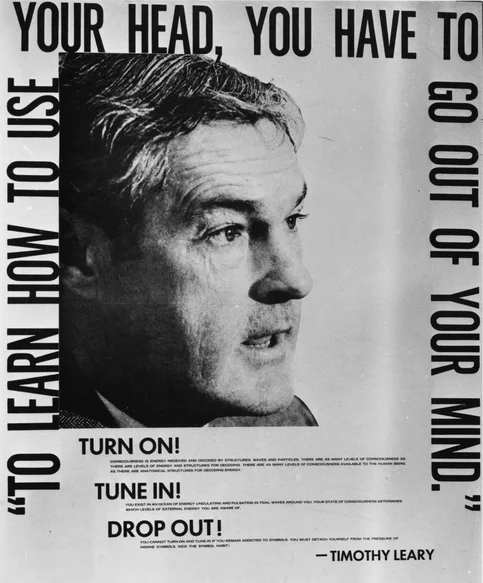
Timothy Leary is famous for his research and advocacy of psychedelic drugs, his dismissal from Harvard University, and his role in the counterculture movement of the 1960s. He is often associated with the phrase “Turn on, tune in, drop out.”
-
What were Timothy Leary’s experiments with LSD?
Leary conducted experiments with LSD at Harvard University, focusing on its effects on human consciousness and behavior. He studied the drug’s potential for therapeutic and spiritual purposes, particularly in prisoners and volunteers.
-
Why was Timothy Leary dismissed from Harvard?
Timothy Leary was dismissed from Harvard in 1963 due to his controversial experiments with LSD. The university administration found his methods unethical and unsuitable for academic research.
-
What was the Harvard Psilocybin Project?
The Harvard Psilocybin Project was a research initiative led by Timothy Leary and Richard Alpert (later known as Ram Dass) that explored the effects of psilocybin mushrooms on human consciousness. The project aimed to understand the potential therapeutic and spiritual benefits of the drug.
-
Did Timothy Leary face legal troubles?
Yes, Timothy Leary faced significant legal troubles. He was arrested for possession of marijuana in 1968 and sentenced to 10 years in prison. He later escaped from prison in 1970 and fled to various countries.
-
What was Timothy Leary’s political involvement?
Timothy Leary briefly ran for governor of California in 1970, campaigning against Ronald Reagan. His campaign was highly publicized and controversial, reflecting his radical views and public persona.
-
What is the Timothy Leary quote “Turn on, tune in, drop out”?
“Turn on” refers to becoming aware of the power of one’s mind and consciousness. “Tune in” means finding the appropriate environment and people to support this awareness. “Drop out” suggests stepping away from the conventional societal norms and constraints.
-
How did Timothy Leary view the potential of psychedelic drugs?
Timothy Leary believed that psychedelic drugs could enhance creativity, promote personal growth, and foster a deeper understanding of the self and the world. He saw them as powerful tools for transforming human consciousness and society.
-
What was Timothy Leary’s impact on the counterculture movement?
Timothy Leary played a significant role in the counterculture movement of the 1960s by popularizing the use of psychedelic drugs and advocating for their benefits. His ideas and public persona inspired a generation to explore alternative lifestyles and question established norms.
-
What was Timothy Leary’s relationship with Aldous Huxley?
Timothy Leary was influenced by the work of Aldous Huxley, particularly his writings on the potential of psychedelic drugs. Huxley’s book “The Doors of Perception” was a significant inspiration for Leary’s own explorations and ideas.
-
How did Timothy Leary’s views on society and human potential evolve?
Throughout his life, Timothy Leary’s views on society and human potential evolved from a focus on scientific research to a more holistic and spiritual perspective. He came to believe that psychedelics could not only heal individuals but also contribute to a more enlightened and harmonious society.
-
What is Timothy Leary’s legacy?
Timothy Leary’s legacy is complex and multifaceted. He is remembered as a pioneering figure in the study of psychedelic drugs and their potential therapeutic benefits. His work and advocacy continue to influence modern research and public discussions about the role of psychedelics in mental health and personal development.
-
What are some of the key books written by Timothy Leary?
Some of Timothy Leary’s key books include “The Psychedelic Experience” (co-written with Ralph Metzner and Richard Alpert), “High Priest,” and “Design for Dying.” These works explore his ideas on psychedelics, consciousness, and personal growth.