Christopher Nolan is a name that resonates deeply within the film industry, a director, screenwriter, producer, and cinematographer whose visionary approach to storytelling has captivated audiences worldwide. Born on July 30, 1970, in London, England, Nolan has become synonymous with complex narratives, intricate plots, and a profound understanding of human psychology. His films, ranging from the mind-bending “Inception” to the epic “The Dark Knight” trilogy, have not only achieved critical acclaim but have also left an indelible mark on popular culture. This article delves into the multifaceted life and career of Christopher Nolan, exploring his journey from a young aspiring filmmaker to one of the most influential directors of his generation.
PERSONAL INFORMATION
| Name | Christopher Nolan |
|---|---|
| Nationality | United Kingdom, United States |
| Place of Birth | London |
| Date of Birth | 30 July 1970 |
| Age | 55 Years |
| Zodiac Sign | Leo |
| Birth Name | Christopher Edward Nolan |
| Languages Spoken | English |
| Gender | Male |
| Native Name | Christopher Nolan |
| Native Language | English |
FAMILY
| Spouse | Emma Thomas |
|---|---|
| Siblings | Jonathan Nolan |
| Children | Rory Nolan, Flora Nolan, Magnus Nolan |
EDUCATION
| Educated At | University College London, Haileybury and Imperial Service College |
|---|
CAREER
| Profession | film director, screenwriter, film producer, actor, writer, camera operator, film actor, executive producer, film editor, cinematographer, director, producer, film screenwriter |
|---|---|
| Awards Received | Indiana Film Journalists Association Award for Best Director, Edgar Awards, Commander of the Order of the British Empire, Saturn Awards, The Waldo Salt Screenwriting Award, Hugo Award for Best Dramatic Presentation, Long Form, Golden Globe Award for Best Director, Academy Award for Best Director, Academy Award for Best Picture, BAFTA Award for Best Direction, Bradbury Award |
| Nominations | Academy Award for Best Writing, Original Screenplay, Academy Award for Best Writing, Original Screenplay, Academy Award for Best Picture, Academy Award for Best Director, Academy Award for Best Picture, European Film Award – People’s Choice Award for Best European Film, Academy Award for Best Director, Academy Award for Best Writing, Adapted Screenplay |
| Work Period Start | 1988, 1993 |
| Member Of | Writers Guild of America West, Directors Guild of America |
| Field of Work | film direction, film screenwriting |
Cost of becoming
The path to becoming a renowned filmmaker is fraught with challenges and sacrifices. For Christopher Nolan, the journey began in his childhood, where he developed a passion for cinema. His early exposure to films like “Star Wars” and “2001: A Space Odyssey” sparked a creative fire that would drive him for years to come. Despite facing financial constraints and the initial lack of recognition, Nolan persisted, often financing his early projects himself. His dedication to the craft, combined with a relentless pursuit of perfection, has been the bedrock of his success. The cost of becoming a filmmaker of Nolan’s caliber is not just financial but also a commitment to artistic integrity and a willingness to take risks.
Identity before fame
Before he became a household name, Christopher Nolan was a student at University College London, where he studied English literature. It was during this time that he began honing his skills behind the camera, filming short films with his friends. His early work was marked by a DIY ethos, using whatever resources were available to him. Nolan’s identity before fame was that of a passionate and dedicated filmmaker, driven by a deep love for the art form. His films during this period, such as “Doodlebug” and “Following,” showcased his unique storytelling style and his ability to create engaging narratives with limited resources.
Timeline
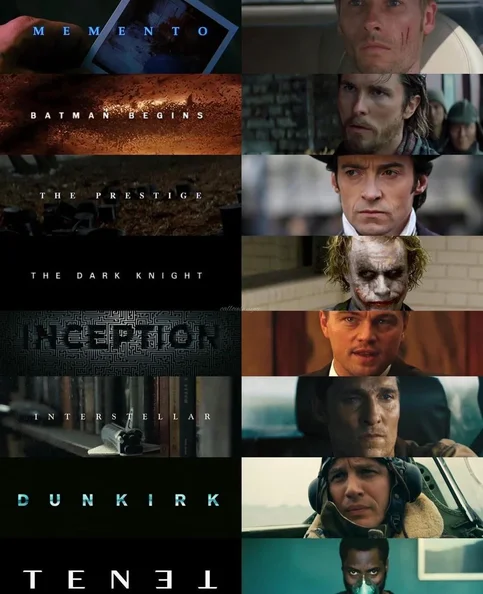
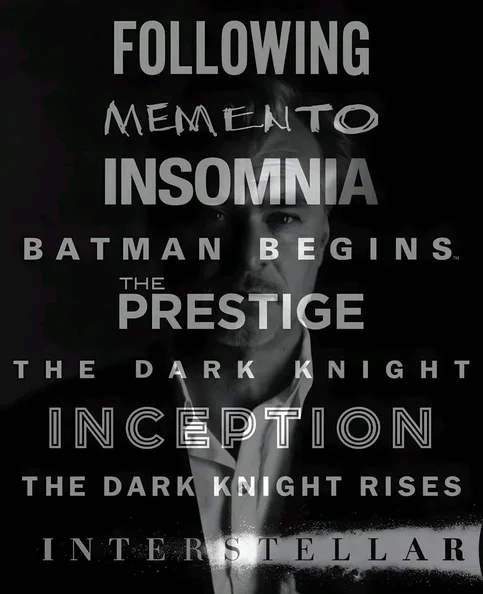
- 1970 – Birth: Christopher Nolan is born on July 30, 1970, in London, England.
- 1996 – “Following”: Nolan’s debut feature film is released, marking the beginning of his career as a filmmaker.
- 2000 – “Memento”: This critically acclaimed film brings Nolan widespread recognition and acclaim.
- 2002 – “Insomnia”: Nolan directs this psychological thriller, further cementing his reputation.
- 2005 – “Batman Begins”: Nolan’s first film in the Dark Knight trilogy, which reinvigorates the superhero genre.
- 2008 – “The Dark Knight”: This film is widely considered a masterpiece and becomes one of the highest-grossing films of the year.
- 2010 – “Inception”: Nolan’s mind-bending sci-fi thriller is a commercial and critical success.
- 2012 – “The Dark Knight Rises”: The final installment in the Dark Knight trilogy receives praise for its epic scope and emotional depth.
- 2014 – “Interstellar”: This ambitious sci-fi film explores complex themes of love, time, and space.
- 2017 – “Dunkirk”: Nolan’s historical war film is lauded for its immersive and intense narrative.
Favourites
- Favorite Film Genre: Sci-fi and psychological thrillers
- Favorite Director: Stanley Kubrick
- Favorite Actor: Leonardo DiCaprio
- Favorite Book: “1984” by George Orwell
- Favorite Musician: Hans Zimmer
- Favorite Film: “2001: A Space Odyssey”
- Favorite Scriptwriting Software: Final Draft
- Favorite Cinematography Technique: Practical effects and in-camera tricks
- Favorite Location to Film: Practical locations that add authenticity to the story
- Favorite Food: Sushi
Controversies
- Rejection of CGI: Nolan’s preference for practical effects over CGI has sometimes led to criticism, especially from those who see CGI as a crucial tool in modern filmmaking.
- Political Statements: Some of his films, such as “Inception” and “Interstellar,” have been interpreted as having underlying political messages, leading to debates about his intentions.
- Box Office vs. Critic Reception: While many of his films are commercial successes, they sometimes receive mixed reviews from critics, particularly regarding their complexity and narrative structure.
- MYTH MANIA: The “Myth of Nolan” has been a topic of discussion, with some fans and critics arguing that his films are overrated or overly complex for the sake of complexity.
- Gender Representation: Some have criticized Nolan for the lack of strong female characters in his films, though this has been addressed in recent works like “Dunkirk” and “Oppenheimer.”
- Use of Shallow Focus: His frequent use of shallow focus in films has been both praised and criticized, with some arguing it can be distracting.
- Environmental Impact: The extensive travel and large-scale production techniques used in his films have raised concerns about their environmental impact.
- Casting Choices: Some of Nolan’s casting choices, particularly for female roles, have been questioned, though he has made efforts to diversify his cast in recent years.
- Marketing Strategies: The aggressive marketing campaigns for his films, including the use of trailers and posters, have sometimes been seen as overhyped.
- Subversion of Expectations: Nolan’s tendency to subvert audience expectations can lead to confusion or disappointment among some viewers.
Control vs chaos
In the world of Christopher Nolan, the themes of control and chaos are ever-present. His films often explore the fine line between order and disorder, the tension between human agency and the unpredictable forces of the universe. Nolan’s meticulous attention to detail in filmmaking, from the use of practical effects to the intricate plot structures, reflects his desire to maintain control over his creative vision. Yet, his narratives often delve into the chaotic, whether it’s the nonlinear storytelling of “Memento” or the dreamscapes of “Inception.” This duality is a hallmark of his work, creating a rich and layered experience for the audience that resonates on multiple levels.
Emotional geography
The emotional landscape of Christopher Nolan’s films is as vast and varied as the physical settings he chooses to explore. From the intimate drama of “Following” to the epic scale of “Interstellar,” Nolan’s work is characterized by a deep emotional resonance. He often delves into themes of grief, loss, and the human condition, creating narratives that are both intellectually stimulating and emotionally powerful. The emotional geography of his films is not just about the characters but also about the audience, inviting viewers to connect with the stories on a personal level. This ability to evoke strong emotions through complex storytelling is one of the hallmarks of Nolan’s unique filmmaking style.
FAQs
-
What is Christopher Nolan’s most famous film?
Christopher Nolan’s most famous film is likely “The Dark Knight,” the second installment in his Dark Knight trilogy. It is widely considered a masterpiece of the superhero genre, praised for its complex storytelling, character development, and thematic depth.
-
How did Christopher Nolan start his career?
Christopher Nolan’s career began with his short films and his debut feature, “Following,” which he wrote, directed, and produced. The film was shot on a shoestring budget and caught the attention of industry professionals, leading to more significant opportunities.
-
What is Christopher Nolan’s approach to special effects?
Christopher Nolan is known for his preference for practical effects over CGI. He believes that practical effects add authenticity and realism to his films, enhancing the audience’s immersion in the story.
-
What are some common themes in Christopher Nolan’s films?
Common themes in Christopher Nolan’s films include the nature of time and memory, the duality of order and chaos, and the human condition. His films often explore complex narratives and psychological depth.
-
How many films has Christopher Nolan directed?
As of 2023, Christopher Nolan has directed ten feature films, including “Following,” “Memento,” “Batman Begins,” “The Dark Knight,” “Inception,” “Interstellar,” and “Dunkirk.”
-
What film did Christopher Nolan win an Academy Award for?
Christopher Nolan has been nominated for Academy Awards, but he has not won one yet. However, his films have received numerous nominations, including Best Picture and Best Director for “The Dark Knight” and “Interstellar.”
-
What is the significance of “Inception” in Nolan’s career?
“Inception” is significant in Nolan’s career as it is a highly original and complex film that showcases his ability to create intricate narratives and mind-bending concepts. The film was both a critical and commercial success, further solidifying Nolan’s status as a visionary filmmaker.
-
How does Christopher Nolan approach storytelling?
Christopher Nolan approaches storytelling with a focus on structure, often using nonlinear narratives and layered plots. He is known for his ability to create engaging and thought-provoking stories that challenge the audience’s perceptions and understanding.
-
What is Christopher Nolan’s relationship with Hans Zimmer?
Christopher Nolan has a long-standing collaboration with composer Hans Zimmer. Zimmer has composed the scores for many of Nolan’s films, including the Dark Knight trilogy, “Inception,” “Interstellar,” and “Dunkirk.” Their partnership is known for creating iconic and emotionally powerful musical scores.
-
How has Christopher Nolan influenced the film industry?
Christopher Nolan has influenced the film industry with his innovative storytelling techniques, his commitment to practical effects, and his ability to blend genres. His films have pushed the boundaries of what is possible in cinema, inspiring other filmmakers and contributing to the evolution of the medium.
-
What are some of Christopher Nolan’s upcoming projects?
As of the latest information, Christopher Nolan is working on a biographical film about J. Robert Oppenheimer, the father of the atomic bomb. The film, titled “Oppenheimer,” is expected to delve into the complexities of Oppenheimer’s life and his role in the development of nuclear weapons.
-
How does Christopher Nolan balance commercial success with artistic integrity?
Christopher Nolan is known for his ability to balance commercial success with artistic integrity. He often chooses projects that have both mainstream appeal and artistic merit, ensuring that his films are accessible to a wide audience while maintaining his creative vision and deeper themes.
-
What is Christopher Nolan’s stance on digital vs. film?
Christopher Nolan is a strong advocate for the use of film over digital formats. He believes that film has a unique quality and depth that digital cannot match. Nolan often uses IMAX cameras to capture high-resolution images, emphasizing the importance of visual and technical excellence in his films.
-
How does Christopher Nolan involve his family in his films?
Christopher Nolan often collaborates with his family in his films. His brother, Jonathan Nolan, has co-written several of his screenplays, including “The Dark Knight” and “Interstellar.” His wife, Emma Thomas, has produced many of his films, and his sister, Melissa Nolan, has also worked on his productions in various capacities.