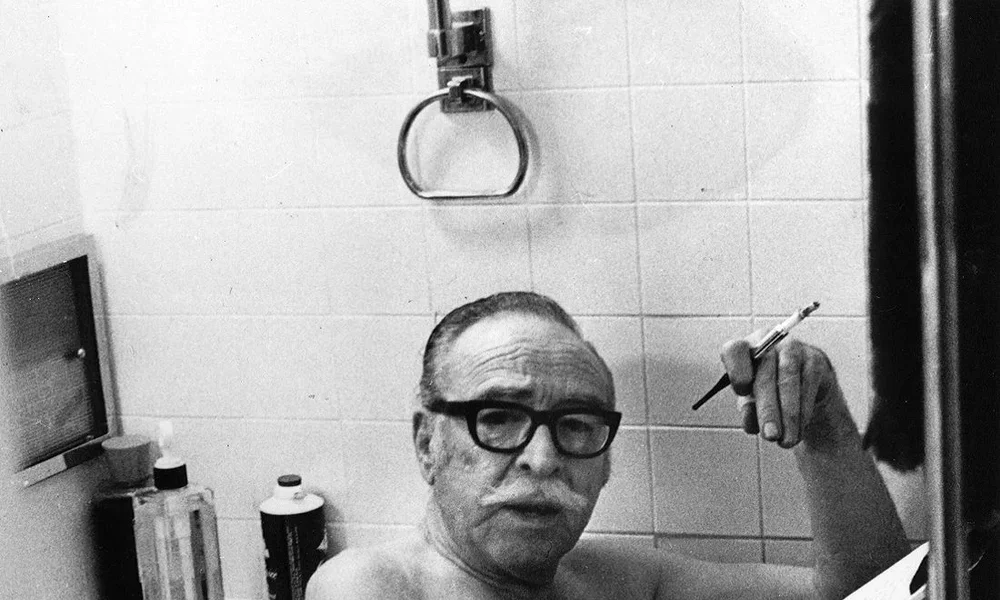
Dalton Trumbo, born on December 9, 1905, in Montrose, Colorado, and passed away on September 10, 1976, was one of the most influential and controversial figures in the American film industry. A renowned screenwriter, novelist, and activist, Trumbo’s career spanned several decades, marked by significant achievements and equally significant controversies. He was a prominent member of the Hollywood Ten, a group of screenwriters and directors who were blacklisted during the McCarthy era for their alleged Communist sympathies. Despite the intense persecution, Trumbo continued to write under pseudonyms and eventually won two Academy Awards. His legacy is a testament to his unwavering commitment to his craft and his principles.
PERSONAL INFORMATION
| Name | Dalton Trumbo |
|---|---|
| Place of Birth | Montrose |
| Place of Death | Los Angeles |
| Nationality | United States |
| Date of Birth | 09 December 1905 |
| Age at Death | 70 Years |
| Zodiac Sign | Sagittarius |
| Date of Death | 10 September 1976 |
| Languages Spoken | English |
| Native Name | James Dalton Trumbo |
| Gender | Male |
| Residence | Fontenay-sous-Bois |
| Native Language | English |
FAMILY
| Children | Christopher Trumbo, Nikola Trumbo, Melissa Trumbo |
|---|
EDUCATION
| Educated At | University of Colorado Boulder, University of Southern California, Grand Junction High School |
|---|
CAREER
| Profession | screenwriter, writer, novelist, director, actor, film producer, film director |
|---|---|
| Awards Received | National Book Award, Academy Award for Best Story, Academy Award for Best Story, Laurel Award for Screenwriting Achievement, Cannes Film Festival Grand Prix |
| Nominations | Academy Award for Best Story, Academy Award for Best Story, Academy Award for Best Writing, Adapted Screenplay, Golden Globe Award for Best Screenplay |
| Member Of | Hollywood Ten |
| Work Period Start | 1936 |
| Genre | drama fiction |
Cost of becoming
Dalton Trumbo’s journey to becoming one of the most celebrated screenwriters in Hollywood was fraught with challenges. His early career was marked by a series of modest jobs, including working as a car washer, a seaman, and a reporter. It was his talent for writing that eventually led him to Hollywood, where he quickly gained recognition for his screenplays. However, the cost of his success was not just the grueling work and long hours; it was also the personal and professional toll of the blacklist. Trumbo’s refusal to denounce his political beliefs and his subsequent blacklisting not only halted his career but also led to a prison sentence and the loss of his reputation. Yet, his determination and creative resilience enabled him to continue writing under pseudonyms and ultimately triumph over adversity.

Identity before fame
Before he became a household name in Hollywood, Dalton Trumbo led a relatively modest life. He grew up in Colorado and later moved to California, where he worked various odd jobs to make ends meet. His early experiences, including working as a night manager at a bakery, provided him with a unique perspective on the working class and social issues, which would later influence his writing. Trumbo’s initial foray into writing was through journalism, and he honed his skills by working for several newspapers. His early works, including the novel “EJohnny Got His Gun,” which was a powerful anti-war statement, showcased his literary talent and his commitment to social justice. These formative years laid the foundation for his future success and his unyielding stance on political issues.
Timeline
- 1905: Dalton Trumbo is born in Montrose, Colorado.
- 1924: Begins his career as a reporter and journalist, working for various newspapers.
- 1939: Publishes his anti-war novel “Johnny Got His Gun,” which becomes a critical success.
- 1940: Moves to Hollywood and starts writing screenplays, including “What Price Glory?”
- 1947: Testifies before the House Un-American Activities Committee (HUAC) and is blacklisted.
- 1950: Is sentenced to one year in federal prison for contempt of Congress.
- 1953: Continues to write under pseudonyms, including the screenplay for “Roman Holiday.”
- 1956: Writes the screenplay for “The Brave One,” which wins an Academy Award for Best Original Story.
- 1960: Is publicly credited for writing “Exodus” and “Spartacus,” marking the end of the blacklist.
- 1976: Passes away in Los Angeles, California.

Favourites
- Novel: “Johnny Got His Gun” (1939)
- Screenplay: “Spartacus” (1960)
- Director: Stanley Kubrick
- Actor: Kirk Douglas
- Genre: Anti-war and social realism
- Book: “Bardo Tales” by Huston Smith
- Place: Hollywood, California
- Activity: Writing and activism
- Food: Home-cooked meals
- Drink: Coffee and whiskey

Controversies
- Blacklist: Trumbo was one of the Hollywood Ten, blacklisted for refusing to answer HUAC questions about his political beliefs.
- Communist Allegations: Despite his refusal to discuss his political affiliations, Trumbo was widely believed to have been a member of the Communist Party.
- Prison Sentence: Served one year in federal prison for contempt of Congress.
- Secret Authorship: Wrote under pseudonyms during the blacklist, leading to controversy over the true authorship of several films.
- Personal Relationships: His friendships with other blacklisted individuals and their families were often scrutinized.
- Political Activism: His outspoken views on social and political issues often drew criticism and opposition.
- Academy Award Controversy: Despite winning an Oscar for “The Brave One,” Trumbo did not receive public credit until years later.
- Screenplay Adaptations: Some of his adaptations, such as “Spartacus,” were seen as politically subversive and faced censorship.
- Investigations: Trumbo was subject to multiple investigations by the FBI and other government agencies.
- Media Scrutiny: His life and work were frequently the subject of media scrutiny and public debate.
Control vs chaos
Dalton Trumbo’s life was a delicate balance between control and chaos. Despite the tumultuous political climate and the personal challenges he faced, he maintained a remarkable level of control over his work and his principles. His steadfast refusal to conform to the pressures of the blacklist and his commitment to his political beliefs demonstrated a strong sense of self-control. At the same time, the chaos of the blacklist, the loss of his career, and the persecution he endured were constant threats to his stability. Trumbo’s ability to navigate these challenges and continue to produce groundbreaking work is a testament to his resilience and his ability to find control in the midst of chaos.
Emotional Geography
Trumbo’s emotional landscape was deeply influenced by his experiences in Hollywood and the broader social and political context of the mid-20th century. The fear and uncertainty of the blacklist, the loss of his reputation, and the isolation he faced took a significant emotional toll. Yet, his deep connection to his family, his fellow blacklisted artists, and his commitment to his work provided a sense of emotional grounding. His anti-war novel “Johnny Got His Gun” and his screenplays often reflected his emotional responses to the injustices he witnessed. Trumbo’s emotional geography was a complex tapestry of pain, resilience, and unwavering hope for a better future.

FAQs
-
Who was Dalton Trumbo?
Dalton Trumbo was an American screenwriter, novelist, and activist best known for his work in Hollywood and his role as a member of the Hollywood Ten. He was blacklisted during the McCarthy era for his alleged Communist sympathies but continued to write under pseudonyms and eventually won two Academy Awards.
-
What is Trumbo’s most famous work?
Trumbo’s most famous work is the anti-war novel “Johnny Got His Gun” (1939). However, he is also renowned for his screenplays, including “Spartacus” (1960) and “Exodus” (1960).
-
What is the Hollywood Ten?
The Hollywood Ten were a group of screenwriters, directors, and producers who were blacklisted in 1947 for refusing to testify before the House Un-American Activities Committee (HUAC) about their alleged Communist affiliations. Dalton Trumbo was one of these ten individuals.
-
Why was Trumbo blacklisted?
Trumbo was blacklisted because he refused to answer questions about his political beliefs and activities when he appeared before the House Un-American Activities Committee (HUAC) in 1947. His refusal to cooperate led to his blacklisting and a prison sentence.
-
What did Trumbo do during the blacklist?
During the blacklist, Trumbo continued to write under pseudonyms. He wrote several screenplays, including “Roman Holiday” (1953) and “The Brave One” (1956), which won an Academy Award for Best Original Story.
-
What was Trumbo’s prison sentence?
Trumbo was sentenced to one year in federal prison for contempt of Congress after refusing to testify before the House Un-American Activities Committee (HUAC).
-
What impact did the blacklist have on Trumbo’s career?
The blacklist had a significant impact on Trumbo’s career, leading to the loss of his reputation and his ability to work openly in Hollywood. However, he continued to write under pseudonyms and eventually broke the blacklist by being publicly credited for “Exodus” and “Spartacus” in 1960.
-
How did Trumbo break the blacklist?
Trumbo broke the blacklist in 1960 when he was publicly credited for writing the screenplays for “Exodus” and “Spartacus.” These high-profile films, directed by Otto Preminger and Stanley Kubrick respectively, marked the end of the blacklist and the restoration of Trumbo’s reputation.
-
What were Trumbo’s political beliefs?
Trumbo was known for his leftist political beliefs, including his opposition to war and his support for social justice. He was widely believed to have been a member of the Communist Party, although he never publicly confirmed or denied this.
-
What other notable works did Trumbo write?
Trumbo wrote several notable works, including the screenplays for “Spartacus,” “Exodus,” “The Brave One,” “Roman Holiday,” and “What Price Glory?” He also authored the novel “Johnny Got His Gun,” which is considered a classic anti-war statement.
-
What awards did Trumbo win?
Trumbo won two Academy Awards: Best Original Story for “The Brave One” (1956) and Best Adapted Screenplay for “Spartacus” (1960). He was also nominated for several other Oscars.
-
How did Trumbo’s experiences influence his writing?
Trumbo’s experiences, particularly his involvement in the blacklist and his political activism, deeply influenced his writing. His screenplays and novels often reflected themes of social justice, political oppression, and the human cost of war. His work was marked by a strong moral and ethical dimension.
-
What is the legacy of Dalton Trumbo?
Dalton Trumbo’s legacy is a complex and enduring one. He is remembered as a brilliant screenwriter and novelist whose work continues to be celebrated for its artistic and political significance. Trumbo’s unwavering commitment to his principles and his resilience in the face of adversity serve as an inspiring example for future generations of writers and activists.
-
What is the significance of “Johnny Got His Gun”?
“Johnny Got His Gun” is a powerful anti-war novel that tells the story of a soldier who is severely wounded and left with his mind intact but unable to communicate. The novel is a haunting critique of war and its dehumanizing effects, and it remains a significant work in American literature.