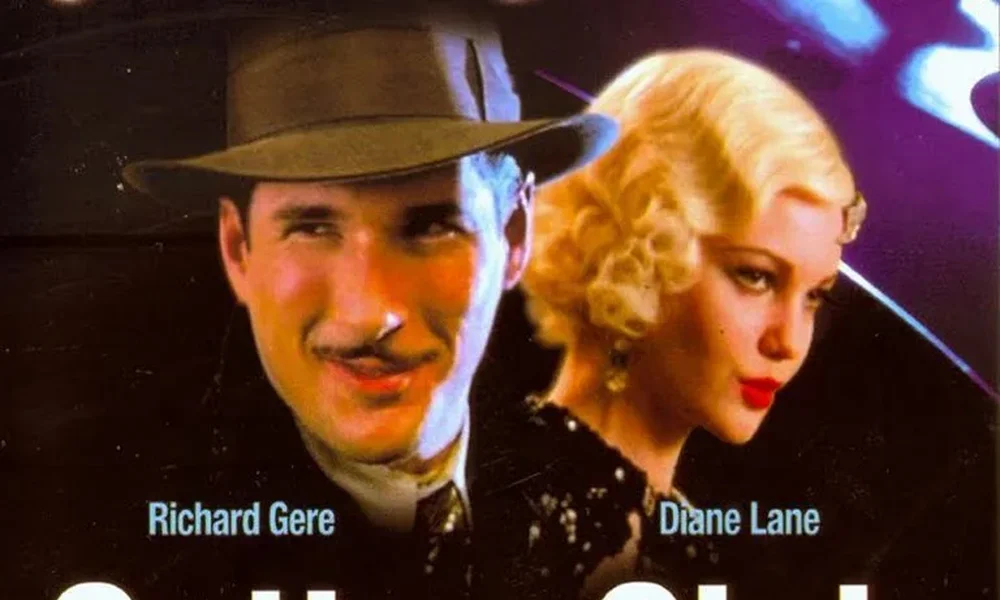
Francis Ford Coppola, a towering figure in the world of cinema, is renowned for his innovative directorial techniques, his deep emotional resonance, and his seminal works that have become cornerstones of American film. Best known for the Godfather trilogy and the epic “Apocalypse Now,” Coppola’s career has been marked by both triumph and controversy. His ability to blend meticulous planning with a willingness to embrace the unexpected has made him one of the most respected and influential directors in the history of film. This article delves into his journey, from his early struggles to his monumental successes, and explores the nuances of his creative process and personal life.
PERSONAL INFORMATION
| Name | Francis Ford Coppola |
|---|---|
| Place of Birth | Detroit |
| Nationality | United States |
| Date of Birth | 07 April 1939 |
| Age | 86 Years |
| Zodiac Sign | Aries |
| Residence | Napa Valley AVA |
| Languages Spoken | English |
| Gender | Male |
| Native Name | Francis Ford Coppola |
| Native Language | English |
| Signature |  |
| Ethnicity | Italian Americans |
PHYSICAL STATISTICS
| Height (in centimeters) | 182 cm |
|---|---|
| Height (in meters) | 1.82 m |
| Height (in feet inches) | 5′ 11″ |
FAMILY
| Children | Sofia Coppola, Roman Coppola, Gian-Carlo Coppola |
|---|---|
| Father | Carmine Coppola |
| Spouse | Eleanor Coppola |
| Mother | Italia Coppola |
| Siblings | Talia Shire, August Coppola |
EDUCATION
| Educated At | Hofstra University, UCLA School of Theater, Film and Television, University of California, Los Angeles, John L. Miller Great Neck North High School, Jamaica High School, New York Military Academy |
|---|
CAREER
| Profession | film director, film producer, screenwriter, film editor, executive producer, composer, winegrower, actor, director, producer, film actor, businessperson, film screenwriter, writer |
|---|---|
| Awards Received | Writers Guild of America Award, Donostia Award, Directors Guild of America Award, Princess of Asturias Award for the Arts, Praemium Imperiale, Academy Award for Best Director, Academy Award for Best Writing, Original Screenplay, Academy Award for Best Writing, Adapted Screenplay, Academy Award for Best Writing, Adapted Screenplay, Academy Award for Best Picture, California Hall of Fame, Fellow of the American Academy of Arts and Sciences, Lumière Award, Lyon Festival of cinema, Writers Guild of America Award, Writers Guild of America Award, National Board of Review Award for Best Film, BAFTA Award for Best Direction, Inkpot Award, Officer of the Legion of Honour, Mary Pickford Award, Order of the Star of Italy, Order of Merit of the Principality of Liechtenstein, Princess of Asturias Awards, Golden Shell, Golden Globe Awards, Palme d’Or, Golden Lion for Lifetime Achievement, Golden Eagle Awards, Irving G. Thalberg Memorial Award, AFI Life Achievement Award, Kennedy Center Honors |
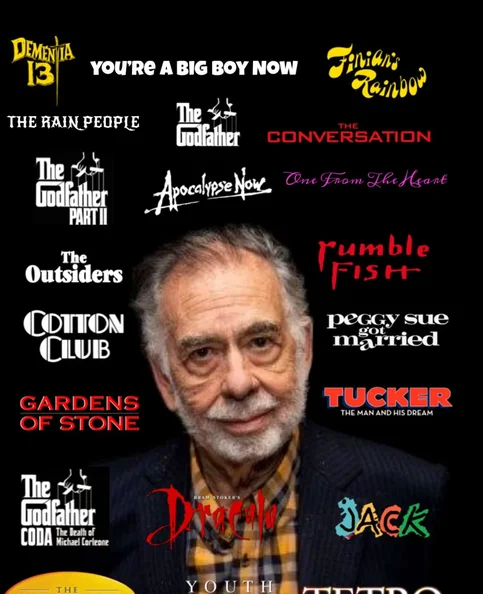
| Notable Works | The Godfather, Rumble Fish, Apocalypse Now, The Conversation, Megalopolis, Bram Stoker’s Dracula, The Rain People, The Outsiders, Apocalypse Now Redux, Peggy Sue Got Married, The Cotton Club, The Rainmaker, Finian’s Rainbow, New York Stories, Gardens of Stone, Youth Without Youth, Dementia 13, Distant Vision, Supernova, Tonight for Sure, Captain EO, Tucker: The Man and His Dream, Tetro, Jack, One from the Heart, Twixt |
| Member Of | American Academy of Arts and Sciences, Writers Guild of America West |
| Work Period Start | 1962 |
| Genre | crime film, drama film, horror film, mystery film, war film, thriller film, gangster film, fantasy film, psychological horror film, psychological thriller film, action film, crime thriller film, war drama, crime drama film, epic film, historical drama film, historical film, gothic horror film, gothic film, adventure film, body horror film, romance film, slasher film, supernatural horror film, New Hollywood |
| Career Start | 1996 |
| Nominations | Academy Award for Best Writing, Original Screenplay, Academy Award for Best Director, Academy Award for Best Writing, Adapted Screenplay, Academy Award for Best Picture, Academy Award for Best Director, Academy Award for Best Writing, Original Screenplay, Academy Award for Best Writing, Adapted Screenplay, Academy Award for Best Picture, Academy Award for Best Picture, Academy Award for Best Director, Academy Award for Best Writing, Adapted Screenplay, Academy Award for Best Picture, Academy Award for Best Director, Academy Award for Best Picture |
| Field of Work | film production, film direction, film screenwriting, viticulture |
SOCIAL MEDIA & LINKS
| IMDB ID | nm0000338 |
|---|---|
| @francisfordcoppola | |
| YouTube Channel | UCoYOlthN2PmOIGhmSEcp6oA |
| Wikipedia | Wikipedia |
Cost of Becoming
The path to becoming one of the greatest directors in cinema history was not an easy one for Francis Ford Coppola. Born on April 7, 1939, in Detroit, Michigan, Coppola faced numerous challenges, including a bout with polio at the age of 10, which left him bedridden for two years. This period of isolation, however, fueled his imagination and creative spirit. Despite the difficulties, Coppola’s determination and passion for storytelling drove him to pursue a career in film. He studied at Hofstra University and later at the University of California, Los Angeles, where he honed his craft. The financial strain and personal sacrifices he made during these years were significant, but they laid the foundation for his future success.
Identity Before Fame
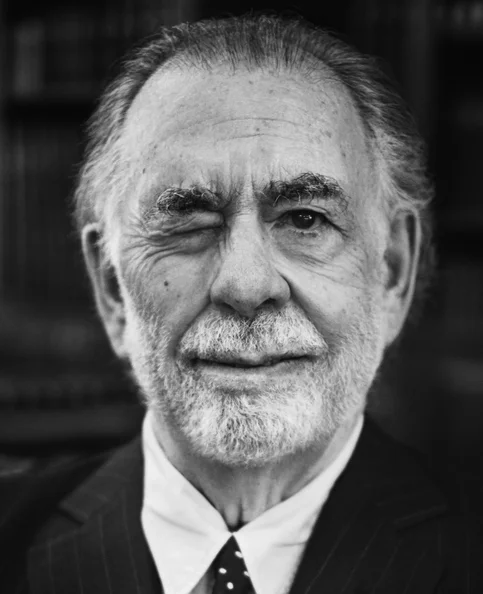
Before achieving widespread recognition, Francis Ford Coppola was a young, ambitious filmmaker with a unique vision. His early films, such as “Dementia 13” and “You’re a Big Boy Now,” showcased his talent for narrative and visual storytelling, but they did not yet secure his place in the industry. Coppola’s breakthrough came with “The Rain People” in 1969, a film that garnered critical acclaim and attention. However, it was his work on “The Godfather” in 1972 that catapulted him to fame. Despite initial resistance from the studio, Coppola’s unwavering commitment to his vision and his ability to navigate the film’s production challenges cemented his reputation as a director who could deliver both artistic and commercial success.
Timeline
- 1939: Born in Detroit, Michigan.
- 1957: Enrolls at Hofstra University to study theater.
- 1960: Transfers to the University of California, Los Angeles (UCLA) to pursue a graduate degree in filmmaking.
- 1963: Directs his first feature film, “Dementia 13.”
- 1967: Releases “You’re a Big Boy Now,” which wins a Special Jury Prize at the Venice Film Festival.
- 1969: Directs “The Rain People,” which receives critical acclaim.
- 1972: “The Godfather” is released, becoming a massive critical and commercial success.
- 1974: Directs “The Godfather Part II,” which wins six Academy Awards, including Best Picture and Best Director.
- 1979: “Apocalypse Now” is released, receiving critical acclaim and winning the Palme d’Or at Cannes.
- 1997: Founding of the American Zoetrope studio, a hub for independent filmmaking.
Favourites
- Directors: Orson Welles, Federico Fellini, Akira Kurosawa
- Films: “Citizen Kane,” “La Strada,” “Seven Samurai”
- Books: “The Great Gatsby” by F. Scott Fitzgerald, “The Picture of Dorian Gray” by Oscar Wilde
- Music: Beethoven, Mozart, The Beatles
- Wines: Napa Valley Cabernet Sauvignon, Barolo
- Actors: Marlon Brando, Al Pacino, Robert Duvall
- Genres: Drama, Epic, Historical
- Locations: Napa Valley, Italy, Vietnam (for filming)
- Cinematographers: Gordon Willis, Vittorio Storaro
- Screenwriters: Mario Puzo, John Milius
Controversies
- Relationship with the Godfather Cast: Initial conflicts with Marlon Brando over his salary and role.
- Apocalypse Now Production: The film’s production was plagued by numerous issues, including financial overruns, weather delays, and health problems.
- Family Business: Accusations of nepotism for casting family members in key roles.
- Political Statements: Some of his films, such as “Apocalypse Now,” have been criticized for their portrayal of political and social issues.
- Financial Troubles: Legal and financial difficulties following the downturn of American Zoetrope in the 1980s.
- Personal Life: Marital issues and personal health concerns have occasionally been the subject of media speculation.
- Directorial Choices: Some of his later films received mixed reviews, leading to debates about his artistic decline.
- Media Criticism: Criticism from some critics for his lack of innovation in recent years.
- Environmental Concerns: Criticism for the environmental impact of filming “Apocalypse Now” in the Philippines.
- Cultural Appropriation: Allegations of cultural insensitivity in “Apocalypse Now” and other films.
Control vs Chaos
Francis Ford Coppola’s approach to filmmaking is a delicate balance between meticulous planning and a willingness to embrace the unexpected. He is known for his detailed storyboards and rigorous attention to detail, yet he also encourages spontaneity and creativity from his cast and crew. This duality is evident in the production of “The Godfather,” where despite the studio’s initial skepticism, Coppola’s unwavering vision and ability to adapt to unforeseen challenges led to a masterpiece. Similarly, the chaotic and often tumultuous production of “Apocalypse Now” is a testament to his ability to navigate the unpredictable and transform adversity into artistic triumph.
Emotional Geography
Coppola’s work often explores the emotional landscape of his characters, delving into their inner worlds and the complexities of their relationships. This is particularly evident in the Godfather trilogy, where he masterfully portrays the dynamics of the Corleone family, their loyalties, betrayals, and the moral dilemmas they face. His films are a reflection of his own emotional journey, from the isolation and creativity spurred by his childhood illness to the highs and lows of a career filled with both success and struggle. Coppola’s ability to infuse his films with a deep sense of emotion and humanity is what sets him apart and resonates with audiences.
FAQs
-
What are some of Francis Ford Coppola’s most famous films?
Francis Ford Coppola is best known for “The Godfather” trilogy, “Apocalypse Now,” “The Conversation,” and “Bram Stoker’s Dracula.” These films are celebrated for their storytelling, visual artistry, and profound emotional impact.
-
How did Francis Ford Coppola start his career in filmmaking?
Coppola began his career in the early 1960s, directing low-budget films like “Dementia 13.” He later studied at UCLA, where he honed his skills and made short films that gained attention. His breakthrough came with “The Rain People” in 1969.
-
What was the significance of “The Godfather” in Coppola’s career?
“The Godfather” was a defining moment in Coppola’s career. Despite initial resistance from the studio, the film became a critical and commercial success, earning numerous Academy Awards and establishing Coppola as a major director in Hollywood.
-
What challenges did Coppola face during the production of “Apocalypse Now”?
The production of “Apocalypse Now” was fraught with challenges, including financial overruns, weather delays, and health issues. The film’s production took four years, and Coppola’s unwavering vision and determination were crucial in bringing the project to fruition.
-
How has Coppola contributed to independent filmmaking?
Coppola is a strong advocate for independent filmmaking. He founded American Zoetrope, a studio dedicated to producing and promoting independent films. Through this studio, he has supported many emerging filmmakers and created a platform for innovative and experimental cinema.
-
What is Coppola’s approach to storytelling in his films?
Coppola’s approach to storytelling is characterized by a deep emotional resonance and a focus on character development. He often explores complex themes and moral dilemmas, creating narratives that are both engaging and thought-provoking. His films are known for their rich characters and immersive storytelling.
-
How has Coppola’s personal life influenced his work?
Coppola’s personal experiences, including his childhood illness and his family’s roots in the entertainment industry, have deeply influenced his work. His films often reflect his own emotional and psychological journeys, and he draws on personal memories and feelings to create authentic and compelling stories.
-
What are some of Coppola’s lesser-known works?
While “The Godfather” and “Apocalypse Now” are his most famous works, Coppola has directed several lesser-known but noteworthy films, such as “The Rain People,” “Tucker: The Man and His Dream,” and “Youth Without Youth.” These films showcase his versatility and creativity.
-
How has Coppola’s style evolved over the years?
Coppola’s style has evolved from the early, more experimental films to the epic and visually rich productions of his later career. While his early works often had a more raw and unpolished feel, his later films are marked by their technical sophistication and narrative depth.
-
What is Coppola’s philosophy on filmmaking?
Coppola believes in the power of storytelling to connect with audiences on a deep emotional level. He values creativity, innovation, and the willingness to take risks. His philosophy emphasizes the importance of maintaining artistic integrity while also engaging with the audience.
-
What are some of Coppola’s most memorable quotes?
Coppola has shared many insightful quotes over the years. One of his most memorable is, “The greatest films are always about character. When you’re making a film, you’re really making a character movie. The story is just an excuse for the characters to explore their world, their lives, and themselves.” This quote encapsulates his belief in the importance of character in filmmaking.
-
How does Coppola balance art and commerce in his films?
Coppola is known for his ability to balance artistic integrity with commercial success. While he is committed to creating films that are artistically significant, he also understands the importance of appealing to a wide audience. This balance is evident in his most successful films, which have both critical acclaim and commercial appeal.
-
What is Coppola’s stance on digital filmmaking?
Coppola has embraced digital filmmaking, recognizing its potential to democratize the medium and make the process more accessible. However, he also values the traditional methods of filmmaking and often combines digital and analog techniques to achieve the desired visual and emotional impact.
-
What are some of Coppola’s future projects?
Coppola continues to be involved in various projects, including writing and directing. He has several films in development, including adaptations of literary works and original stories. His focus remains on creating meaningful and innovative films that resonate with audiences.