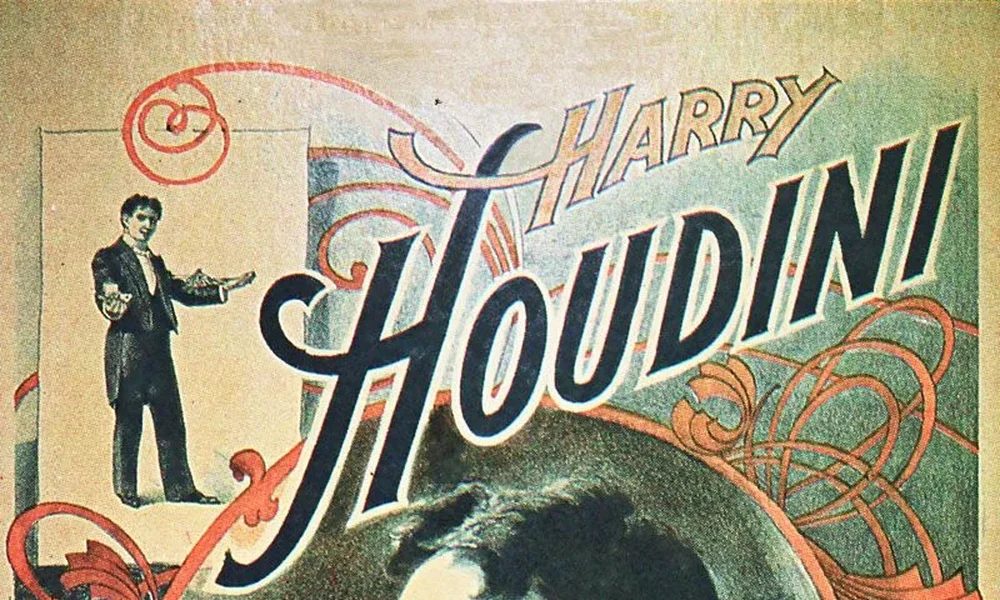
Harry Houdini, born Erik Weisz in 1874, was one of the most renowned magicians and escape artists of the 20th century. His illustrious career spanned several decades, captivating audiences worldwide with his daring and seemingly impossible escapes. Known for his magnetic personality and relentless pursuit of the impossible, Houdini transformed the art of magic into a global sensation. His legacy endures, not only as a performer but also as a skeptic and debunker of fraudulent mediums and spiritualists. Houdini’s life was a testament to his unwavering determination and his ability to control even the most chaotic situations.
PERSONAL INFORMATION
| Name | Harry Houdini |
|---|---|
| Gender | Male |
| Signature |  |
| Place of Birth | Budapest |
| Place of Death | Detroit |
| Nationality | Austria–Hungary, United States |
| Date of Birth | 24 March 1874 |
| Age at Death | 52 Years |
| Zodiac Sign | Aries |
| Date of Death | 31 October 1926 |
| Birth Name | Erik Weisz |
| Ethnicity | Jewish people |
| Native Name | Harry Houdini |
| Residence | Jewish Harlem |
| Languages Spoken | English |
| Religion | Judaism |
| Native Language | English |
FAMILY
| Spouse | Bess Houdini |
|---|---|
| Father | Rabbi Samuel Mayer Weisz |
| Mother | Cecilia Steiner |
CAREER
| Profession | actor, performing artist, aircraft pilot, philosopher, film producer, historian, magician, stunt performer, film director, escape artist, illusionist, screenwriter |
|---|---|
| Field of Work | magician, escapology |
| Work Period Start | 1896 |
| Work Period End | 1926 |
| Awards Received | star on Hollywood Walk of Fame |
Cost of becoming
The path to becoming Harry Houdini was not without its challenges. Born to an impoverished family, Houdini’s early life was marked by struggle and adversity. His family’s move to the United States in 1878 and the subsequent death of his father in 1892 left a significant impact on him. Houdini had to work from a young age, taking on various jobs to support his family. Despite these hardships, he never lost his passion for magic. He spent countless hours practicing and perfecting his craft, often at the expense of his personal well-being. The financial and emotional toll of his relentless pursuit of perfection was significant, but it was this very dedication that ultimately propelled him to stardom.
Identity before fame
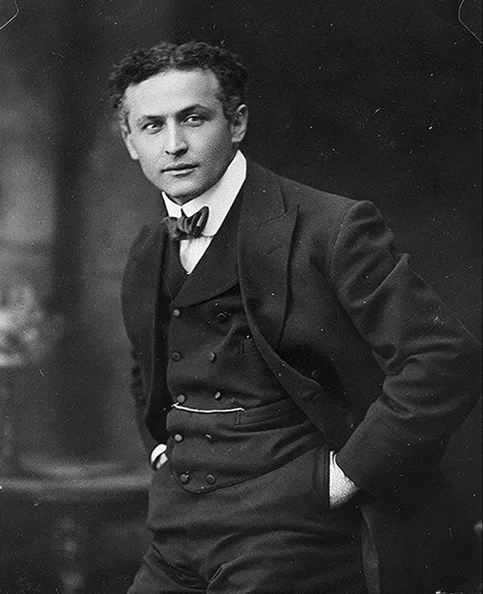
Before he became the world-famous Harry Houdini, Erik Weisz was just a young boy from Budapest, Hungary. His family’s move to Appleton, Wisconsin, in 1878 marked the beginning of a new chapter in his life. Houdini’s early years were filled with modest beginnings and hard work. He took on various jobs, including selling newspapers and working as a mechanic, to help support his family. It was during this time that he discovered his love for magic, often performing simple tricks for his friends and family. His passion for performance was evident even in his youth, and he began to hone his skills in secret, laying the foundation for his future career.
Timeline
- 1874: Born as Erik Weisz in Budapest, Hungary.
- 1878: Family moves to Appleton, Wisconsin, USA.
- 1891: Begins his career in magic, performing as “Ehrich, The Prince of the Air.”
- 1894: Marries Bess Rahner, who becomes his lifelong stage assistant.
- 1899: Signs a contract with Martin Beck, the head of the Orpheum Vaudeville Circuit, marking the beginning of his rise to fame.
- 1904: Completes his first successful underwater escape, demonstrating his skill and bravery.
- 1908: Debuts the “Chinese Water Torture Cell,” one of his most famous and dangerous acts.
- 1914: Begins his campaign against fraudulent spiritualists and mediums, earning a reputation as a skeptic.
- 1926: Dies on October 31, in Detroit, Michigan, from peritonitis, a result of a ruptured appendix.
- 1986: Inducted into the International Magicians Society’s Hall of Fame, cementing his legacy.
Favourites
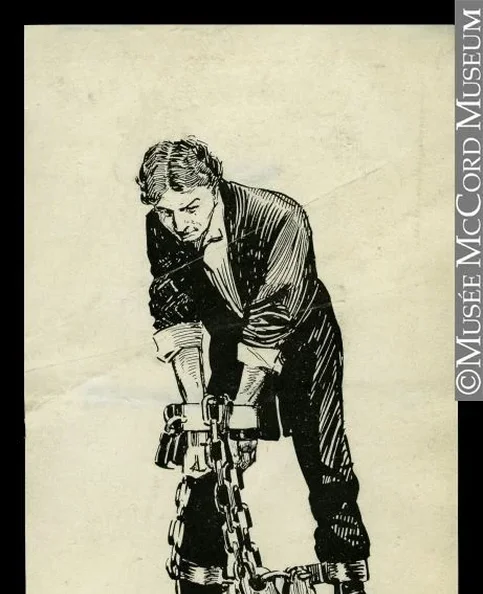
- Performing Venue: The Hippodrome in New York City, where he performed his famous water torture escape.
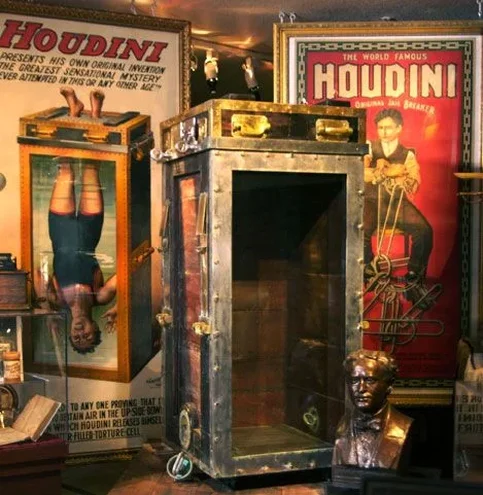
- Escape Act: The “Chinese Water Torture Cell,” which involved being suspended upside down in a locked glass tank filled with water.
- City: New York City, which he considered his adopted hometown and where he spent much of his career.
- Book: “A Magician Among the Spirits,” his exposé on fraudulent spiritualists.
- Magician: Jean Eugène Robert-Houdin, whose work and legacy inspired Houdini to adopt a variant of his name.
- Trick: The “Metamorphosis” illusion, where he and his wife Bess would instantly switch places in a locked trunk.
- Woman: His wife, Bess Rahner, who was his constant companion and stage assistant throughout his career.
- Time of Day: Nighttime, when the theater lights and stage were set, and the audience was captivated by his performances.
- Food: Although not well-documented, Houdini was known to have a simple diet, often eating light meals to maintain his physical fitness.
- Movie: “H맵oudini,” the 1953 film that portrayed his life and career.
Controversies
- Exposure of Mediums: Houdini’s crusade against fraudulent spiritualists and mediums led to significant controversy, with many spiritualists and their followers labeling him as a skeptic and a debunker.
- Challenge to Hindu Priestette: In 1926, he publicly challenged the Hindu priestette M. Lamar Keene, who claimed to have supernatural powers, leading to a tense confrontation and media scrutiny.
- Claimed Supernatural Ability: Despite his role as a skeptic, some critics accused Houdini of sometimes blurring the line between magic and the supernatural, leading to debates about his motives.
- Ghost Club Membership: Houdini’s membership in the Ghost Club, a group of paranormal investigators, raised eyebrows and questions about his true beliefs.
- Dispute with Sir Arthur Conan Doyle: His friendship with Sir Arthur Conan Doyle, a believer in spiritualism, eventually soured over their differing views on the supernatural, leading to a public feud.
- Accusations of Plagiarism: Some accused Houdini of copying or stealing ideas from other magicians, though these claims were largely unfounded.
- Health Speculations: His frequent and dangerous stunts led to speculation about his health and the long-term effects of his performances, particularly following his death from peritonitis.
- Ghostly Promises: Houdini’s promise to communicate from beyond the grave and the subsequent failure to do so led to ongoing debates and investigations by his followers and skeptics.
- Political Stands: Houdini’s outspoken views on certain political and social issues occasionally put him at odds with various groups, including some within the entertainment industry.
- Ownership Disputes: Legal battles over the rights to his name and legacy after his death continued for years, involving his family and various organizations.
Control vs chaos
Houdini’s life was a constant battle between control and chaos. On one hand, he thrived on the controlled environment of the stage, where every move and illusion was meticulously planned. His performances were a testament to his ability to master the art of illusion and manipulate the audience’s perceptions. On the other hand, his escape acts often involved placing himself in life-threatening situations, embracing the chaos and unpredictability of the moment. This duality was a hallmark of his career, showcasing his strength of character and his unwavering determination to push the boundaries of what was possible.
Emotional geography
Houdini’s emotional geography was deeply rooted in his early life experiences and the challenges he faced. Growing up in poverty and losing his father at a young age instilled in him a strong sense of determination and resilience. His move to the United States and the subsequent struggles he endured to make a name for himself in the entertainment industry fueled his ambition. Despite the fame and success, Houdini remained grounded, drawing strength from his family and the support of his wife, Bess. His life was a rich tapestry of emotions, from the thrill of performing to the personal losses and the relentless pursuit of his dreams.
FAQs
-
Who was Harry Houdini?
Harry Houdini, born Erik Weisz in 1874, was a renowned magician and escape artist. He is best known for his daring and seemingly impossible escape acts, which captivated audiences worldwide and established him as a legendary figure in the world of magic and entertainment.
-
Where was Harry Houdini born?
Harry Houdini was born in Budapest, Hungary, in 1874. His original name was Erik Weisz, and his family immigrated to the United States when he was four years old.
-
What was Harry Houdini’s real name?
Harry Houdini’s real name was Erik Weisz. He later changed it to Harry Houdini, inspired by the French magician Jean Eugène Robert-Houdin.
-
When did Harry Houdini start his career in magic?
Harry Houdini began his career in magic in the early 1890s, performing under the name “Ehrich, The Prince of the Air.” He honed his skills through various performances and street shows before gaining widespread recognition.
-
What is Harry Houdini’s most famous escape?
One of Harry Houdini’s most famous escapes was the “Chinese Water Torture Cell,” where he was suspended upside down in a locked glass tank filled with water. This daring act demonstrated his exceptional physical and mental endurance.
-
Was Harry Houdini married?
Yes, Harry Houdini was married to Bess Rahner in 1894. Bess was not only his wife but also his lifelong stage assistant, playing a crucial role in many of his performances and stunts.
-
How did Harry Houdini become famous?
Harry Houdini became famous through his innovative and daring escape acts, which quickly gained attention and popularity. His performances on the vaudeville circuit and his public demonstrations of his skills, often in challenging and dangerous situations, propelled him to stardom.
-
What was Harry Houdini’s attitude towards spiritualism?
Harry Houdini was a prominent skeptic and debunker of fraudulent spiritualists and mediums. He devoted a significant portion of his career to exposing the tricks and deceptions used by those claiming supernatural powers, despite his friendship with believers like Sir Arthur Conan Doyle.
-
How did Harry Houdini die?
Harry Houdini died on October 31, 1926, in Detroit, Michigan, from peritonitis, a result of a ruptured appendix. His death was a tragic end to a remarkable life and career.
-
What is the legacy of Harry Houdini?
Harry Houdini’s legacy is one of exceptional skill, innovation, and entertainment. He is remembered as one of the greatest magicians and escape artists of all time, and his influence continues to inspire magicians and performers around the world. His skepticism and efforts to expose fraud have also had a lasting impact on the field of paranormal investigation.
-
Did Harry Houdini have any children?
No, Harry Houdini did not have any children. Despite his long and happy marriage to Bess Rahner, they did not have any biological children together.
-
What was Harry Houdini’s most dangerous act?
One of Harry Houdini’s most dangerous acts was the “Buried Alive” stunt, where he was buried in a sealed casket and had to escape from the underground chamber. This act was particularly risky and tested the limits of his physical and mental endurance.
-
What was Harry Houdini’s relationship with Sir Arthur Conan Doyle?
Harry Houdini and Sir Arthur Conan Doyle had a complex and evolving relationship. Initially, they were friends and shared a mutual interest in the supernatural, but their views eventually diverged, leading to a public feud and the deterioration of their friendship.
-
What is the Harry Houdini Museum?
The Harry Houdini Museum is a museum dedicated to preserving and showcasing the life and career of Harry Houdini. Located in Scranton, Pennsylvania, it features exhibits, artifacts, and memorabilia that highlight his contributions to magic and entertainment.
-
How has Harry Houdini influenced modern magic?
Harry Houdini’s influence on modern magic is profound. His innovative escape acts, public demonstrations, and skepticism have shaped the way magic is performed and perceived. Many contemporary magicians cite Houdini as a major inspiration and continue to perform and adapt his classic illusions.
-
What books did Harry Houdini write?
Harry Houdini wrote several books, including “A Magician Among the Spirits,” which detailed his experiences and scepticism regarding spiritualism, and “The Unmasking of Robert-Houdin,” a biography of the magician who inspired his stage name.