The Notorious B.I.G., also known as Biggie Smalls, is one of the most influential and iconic figures in the history of hip-hop. Born Christopher George Latore Wallace on May 21, 1972, in Brooklyn, New York, Biggie rose from the streets of Bedford-Stuyvesant to become a megastar. His smooth flow, vivid storytelling, and introspective lyrics made him a legend in his own right. Tragically, his life was cut short on March 9, 1997, when he was murdered in Los Angeles. Yet, his legacy continues to inspire and resonate with fans around the world.
PERSONAL INFORMATION
| Name | The Notorious B.I.G. |
|---|---|
| Gender | Male |
| Place of Birth | Bedford–Stuyvesant |
| Nationality | United States |
| Date of Birth | 21 May 1972 |
| Age at Death | 24 Years |
| Zodiac Sign | Gemini |
| Date of Death | 09 March 1997 |
| Place of Death | Los Angeles |
| Birth Name | Christopher George Latore Wallace |
| Native Language | African American English |
| Languages Spoken | African American English |
| Native Name | The Notorious B.I.G. |
| Ethnicity | Jamaican Americans |
| Signature |  |
PHYSICAL STATISTICS
| Height (in centimeters) | 190 cm |
|---|---|
| Height (in meters) | 1.90 m |
| Height (in feet inches) | 6′ 2″ |
FAMILY
| Spouse | Faith Evans |
|---|---|
| Mother | Voletta Wallace |
| Children | T’yanna Wallace, C.J. Wallace |
EDUCATION
| Educated At | George Westinghouse Career and Technical Education High School, Bishop Loughlin Memorial High School |
|---|
CAREER
| Profession | rapper, songwriter, record producer, actor |
|---|---|
| Genre | East Coast hip-hop, gangsta rap, hardcore hip-hop, G-funk, mafioso rap, hip-hop |
| Record Label | Bad Boy Records, Uptown Records, Atlantic Records Group, Arista Records |
| Work Period Start | 1992 |
| Work Period End | 1997 |
| Instruments | voice |
| Awards Received | Rock and Roll Hall of Fame |
SOCIAL MEDIA & LINKS
| IMDB ID | nm0857263 |
|---|---|
| NotoriousBIG | |
| YouTube Channel | UCIZGqIYkST36dLp0uf9o9nw |
| @thenotoriousbig | |
| @thenotoriousbig | |
| Wikipedia | Wikipedia |
Cost of Becoming
Becoming The Notorious B.I.G. was no easy feat. Biggie’s journey from the streets of Brooklyn to the global stage came with significant personal and professional costs. Early in his career, he had to navigate the dangerous waters of the drug trade to support himself and his family. This experience not only shaped his music but also left lasting scars. His raw and honest lyrics reflected the harsh realities of his upbringing, earning him a loyal fanbase and critical acclaim. However, the fame also brought increased scrutiny and rivalries, most notably with West Coast rapper Tupac Shakur. The pressure of maintaining his success and the public’s expectations took a toll on his mental and physical health, ultimately contributing to the tragic events that led to his untimely death.
Identity Before Fame
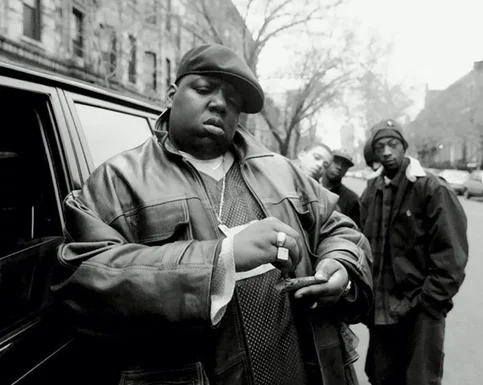
Before he became a rap icon, Christopher Wallace was a regular kid from Brooklyn. Growing up in the rough neighborhood of Bedford-Stuyvesant, he faced numerous challenges. His mother, Voletta Wallace, worked as a pre-kindergarten teacher to support the family. Despite his academic struggles, Biggie had a natural talent for writing and storytelling. He began rapping at a young age, often freestyling with friends in the park. However, life on the streets also pulled him into the drug trade. He was arrested for dealing and served time in a juvenile detention center. These experiences, though difficult, provided the foundation for the vivid narratives that would later define his music.
Timeline
- 1972: Born Christopher George Latore Wallace in Brooklyn, New York.
- 1984-1988: Attends George Westinghouse Career and Technical Education High School.
- 1988: Begins dealing drugs to support his family and himself.
- 1990: Meets Sean “Puffy” Combs, who is impressed by his rapping skills.
- 1992: Signs with Bad Boy Records after impressing Combs with his debut single “Juicy.”
- 1994: Releases his debut album, Ready to Die, which becomes an instant classic.
- 1996: Releases his second album, Life After Death, which is posthumously completed after his death.
- 1997: Murdered in a drive-by shooting in Los Angeles on March 9.
Favourites
- Album: Ready to Die
- Song: “Juicy”
- Producer: Sean “Puffy” Combs
- Collaborator: Faith Evans
- Hobby: Playing basketball
- Food: Steak and lobster
- Movie: “Goodfellas”
- Book: “The Godfather”
- Place: Brooklyn, New York
- Color: Black and gold
Controversies
- East Coast vs. West Coast Rivalry: Biggie was at the center of the infamous feud between East Coast and West Coast hip-hop, which ultimately resulted in the deaths of both Biggie and Tupac Shakur.
- Accusations of Betrayal: Some fans and critics accused Biggie of betraying the East Coast by appearing to side with the Los Angeles police after Tupac’s death.
- Drug Dealing Past: Biggie’s involvement in the drug trade prior to his music career was a source of controversy and scrutiny.
- Legal Issues: He faced multiple legal challenges, including a lawsuit from a woman who claimed he fathered her child.
- Feuds with Other Rappers: Biggie had public feuds with other rappers, including Lil Kim and Mobb Deep.
- Gun Ownership: His possession of firearms and the implications of his lifestyle were often criticized.
- 临沂争议: There were rumors and speculations about his personal relationships and alleged infidelities.
- Media Scrutiny: Biggie often found himself under intense media scrutiny, which sometimes led to misrepresentations and distortions of his character.
- Allegations of Involvement in Tupac’s Murder: Some theories suggested that Biggie or his associates were involved in Tupac’s death, though these have never been substantiated.
- Financial Disputes: There were disputes over the distribution of his estate and the royalties from his music after his death.
Control vs Chaos
The Notorious B.I.G. navigated a life that oscillated between moments of control and chaotic turmoil. His rise to fame was marked by strategic decisions and calculated moves, such as aligning himself with Bad Boy Records and Puffy. However, the chaotic aspects of his life, including the drug trade, legal issues, and the East Coast-West Coast beef, often threatened to derail his success. Biggie’s ability to maintain his composure and focus on his music, even in the face of immense pressure, is a testament to his resilience and strength. Yet, the chaotic elements ultimately played a role in his tragic demise, highlighting the fine line between control and chaos in his life.
Emotional Geography
The Notorious B.I.G.’s music is a vivid map of his emotional landscape, rooted in the streets of Brooklyn. His lyrics often paint a picture of the duality of his life—rising from poverty and crime to fame and fortune, while still grappling with the demons of his past. Songs like “Juicy” and “Gimme the Loot” are not just tales of success; they are also confessions of the price paid for that success. Biggie’s emotional geography is a journey through the tough neighborhoods of Brooklyn, the high-stakes world of the music industry, and the inner turmoil of a man who never forgot where he came from. His music continues to resonate because it captures the universal struggles and aspirations of people from all walks of life.
FAQs
-
Who was The Notorious B.I.G.?
The Notorious B.I.G., also known as Biggie Smalls, was an American rapper born Christopher George Latore Wallace. He is one of the most influential and iconic figures in hip-hop, known for his smooth flow and vivid storytelling.
-
When was Biggie born?
Biggie was born on May 21, 1972, in Brooklyn, New York.
-
What was Biggie’s real name?
His real name was Christopher George Latore Wallace.
-
What was Biggie’s first album?
Biggie’s first album, Ready to Die, was released in 1994 and became an instant classic.
-
Who was Biggie’s label?
Biggie was signed to Bad Boy Records, founded by Sean “Puffy” Combs.
-
How did Biggie die?
Biggie was murdered in a drive-by shooting in Los Angeles on March 9, 1997.
-
What is the East Coast-West Coast feud?
The East Coast-West Coast feud was a significant rivalry in hip-hop during the 1990s, involving rappers from New York and Los Angeles. Biggie and Tupac Shakur were central figures in this conflict.
-
What was Biggie’s most famous song?
One of Biggie’s most famous songs is “Juicy,” which is often cited as a classic in hip-hop.
-
How did Biggie get his nickname?
Biggie got his nickname “Biggie Smalls” because of his size; he was a large person, and the “Smalls” part was a play on words, as he was actually anything but small.
-
What was Biggie’s relationship with Faith Evans?
Biggie and Faith Evans were close collaborators and had a romantic relationship. Faith Evans sang on several of Biggie’s tracks, including “One More Chance” and “Notorious Thugs.”
-
How did Biggie’s family react to his success?
Biggie’s family was initially proud of his success but also concerned about the dangers and pressures of his lifestyle. His mother, Voletta Wallace, has been a vocal advocate for his legacy.
-
What impact did Biggie have on hip-hop?
Biggie had a profound impact on hip-hop, influencing a generation of rappers with his storytelling and smooth flow. His music continues to be celebrated and studied for its depth and authenticity.
-
What is the legacy of The Notorious B.I.G.?
The legacy of The Notorious B.I.G. is one of cultural significance and artistic excellence. He is remembered as a pioneer who helped shape the sound and style of hip-hop, and his influence continues to be felt in music today.
-
Are there any notable documentaries or biopics about Biggie?
Yes, there are several documentaries and films about Biggie, including “The Notorious B.I.G. (2000)” and “Notorious” (2009), which explore his life, career, and legacy.
-
What are some of Biggie’s most impactful lyrics?
Biggie’s lyrics are known for their vivid storytelling and emotional depth. Some notable lines include “Born sinnin’ / I can’t help myself, I rob banks, traps and kin folk” from “Juicy” and “Baby boy got no support, now I’m stuck with a career / Tryna make ends meet so I can feed my daughter, she’s all I got in life” from “The What.”