
Wes Anderson is a name synonymous with whimsical, meticulously crafted films that blend quirky characters, vibrant colors, and a distinct visual style. Born on May 1, 1969, in Houston, Texas, Anderson has carved a niche for himself in the film industry with a unique aesthetic that resonates with both critics and audiences. His films, such as “The Royal Tenenbaums,” “The Grand Budapest Hotel,” and “Isle of Dogs,” are celebrated for their intricate storytelling, symmetrical compositions, and a penchant for the peculiar. Anderson’s work is a testament to his ability to blend nostalgia, humor, and a deep humanism that touches the heart. Through his films, he explores themes of family, loss, and the search for meaning, all while maintaining a sense of playfulness and wonder. This article delves into the life, career, and creative processes of Wes Anderson, providing a comprehensive look at the man behind the camera.
PERSONAL INFORMATION
| Name | Wes Anderson |
|---|---|
| Gender | Male |
| Nationality | United States |
| Date of Birth | 01 May 1969 |
| Age | 56 Years |
| Zodiac Sign | Taurus |
| Place of Birth | Houston |
| Birth Name | Wesley Wales Anderson |
| Native Name | Wes Anderson |
| Residence | Paris |
| Languages Spoken | English |
| Native Language | English |
PHYSICAL STATISTICS
| Eye Color | Blue |
|---|
FAMILY
| Siblings | Eric Chase Anderson |
|---|---|
| Partner | Juman Malouf |
EDUCATION
| Educated At | University of Texas at Austin, St. John’s School, Westchester Enriched Sciences Magnets, Westchester Academy for International Studies, St. Francis Episcopal School |
|---|
CAREER
| Profession | film director, screenwriter, film producer, writer, actor, animator, manufacturer, director |
|---|---|
| Notable Works | The Darjeeling Limited, The Royal Tenenbaums, Moonrise Kingdom, Fantastic Mr. Fox, Rushmore, Hotel Chevalier, Bottle Rocket, The Life Aquatic with Steve Zissou, The Squid and the Whale, The Grand Budapest Hotel, Isle of Dogs, Bar Luce (Prada) |
| Awards Received | Annie Award, Golden Globe Awards, Academy Award for Best Live Action Short Film |
| Nominations | Academy Award for Best Director, Academy Award for Best Writing, Original Screenplay, Academy Award for Best Writing, Original Screenplay, Academy Award for Best Writing, Original Screenplay, Academy Award for Best Picture, Academy Award for Best Animated Feature, Academy Award for Best Animated Feature |
| Work Period Start | 1994 |
| Member Of | Writers Guild of America West, Directors Guild of America |
Cost of becoming
Becoming a filmmaker of Wes Anderson’s caliber is no easy feat. It requires a blend of natural talent, unrelenting passion, and a strong work ethic. Anderson’s journey to success was marked by numerous setbacks and challenges. He studied philosophy at the University of Texas at Austin, where he met his future collaborator, Owen Wilson. Despite his academic background, Anderson was always drawn to the world of filmmaking. He began making short films during his college years, using a Super 8 camera. These early projects, while modest, laid the foundation for his distinctive style. The cost of becoming a renowned filmmaker included years of experimentation, learning from failures, and building a network of creative collaborators. Anderson’s dedication to his craft and his unwavering belief in his vision ultimately paid off, leading to a career that has produced some of the most beloved and critically acclaimed films of our time.
Identity before fame
Before he became the acclaimed filmmaker we know today, Wes Anderson was a young man with a passion for storytelling. Growing up in Houston, Texas, he was exposed to a rich cultural scene that fostered his creativity. His parents, Archie Attenson Anderson Jr. and Texas Ann (née Jarvis), were real estate agents, and their divorce when Anderson was young had a profound impact on his emotional and artistic development. Anderson’s early interest in film was evident from a young age, and he often found himself drawn to the world of theater and visual arts. His time at the University of Texas was instrumental in shaping his identity as a filmmaker. It was there that he met Owen Wilson, and the two began their long-standing creative partnership. Anderson’s early works, such as his short film “Bottle Rocket,” were precursors to the style that would later define his career. These early experiences and collaborations were crucial in forming the identity of the artist he would become.
Timeline
- 1969: Wes Anderson is born on May 1, in Houston, Texas.
- 1975: His parents divorce, an event that deeply influences his later work.
- 1987: Begins studying philosophy at the University of Texas at Austin.
- 1990: Meets Owen Wilson, forming a lifelong creative partnership.
- 1992: Directs his first short film, “Bottle Rocket.”
- 1994: Releases his debut feature film, “Bottle Rocket,” which garners critical acclaim.
- 1998: Directs “Rushmore,” starring Bill Murray, which is a commercial and critical success.
- 2001: Releases “The Royal Tenenbaums,” solidifying his unique style and themes.
- 2012: Directs “Moonrise Kingdom,” a film that further explores his recurring themes.
- 2014: Releases “The Grand Budapest Hotel,” which wins four Academy Awards.

Favourites
- Actor: Bill Murray, who has appeared in multiple Anderson films.
- Color: Red, prominently featured in “The Grand Budapest Hotel.”
- Location: Europe, particularly Eastern Europe, as seen in “The Grand Budapest Hotel.”
- Film Genre: Mixture of comedy and drama, often with a touch of surrealism.
- Animal: Dogs, a recurring theme in films like “Isle of Dogs.”
- Music Genre: Mid-century pop and classical music, often used in his films.
- Book: “Moonrise Kingdom,” which he co-wrote and directed.
- Time Period: The 1960s and 1970s, a recurring setting in his films.
- Theme: Family dynamics and the search for belonging.
- Visual Element: Symmetry, a hallmark of his directorial style.

Controversies
- Consistent Use of Minor Characters: Some critics have pointed out that Anderson often repeats his supporting cast, leading to accusations of relying on a “stock” group of actors.
- Whiteness in Casting: His films have been criticized for predominantly featuring white casts, despite exploring diverse themes.
- PHadornimacy in “The French Dispatch”: The film’s portrayal of French culture has been critiqued for perpetuating stereotypes.
- Political Sensitivity: “The Grand Budapest Hotel” has been criticized for its depiction of Nazi-like characters, which some feel trivializes the historical context.
- Accusations of Aestheticism Over Substance: Some viewers and critics argue that Anderson’s films prioritize style over substance, focusing too much on visual aesthetics.
- Gender Representation: His films have been criticized for a lack of strong, well-developed female characters.
- Commercialization of Art: Some fans feel that Anderson’s films have become more commercial over the years, losing some of their originality and edge.
- Interpretations of Themes: The interpretation of his themes, such as family and loss, can vary widely, leading to differing opinions on their effectiveness.
- Collaborative Processes: The tight-knit nature of his creative team has led some to question the diversity of perspectives in his work.
- Impact on Indie Cinema: Some argue that Anderson’s success has set a high bar for indie filmmakers, making it difficult for new, diverse voices to break through.
Control vs chaos
Wes Anderson’s films are a fascinating exploration of the tension between control and chaos. His meticulous attention to detail and symmetrical compositions create a sense of order and stability, which is often juxtaposed with the chaotic and unpredictable nature of human emotion. This duality is a recurring theme in his work, reflecting the struggle to find balance in a world that is inherently unpredictable. In films like “The Grand Budapest Hotel” and “The Royal Tenenbaums,” Anderson’s characters often find themselves in controlled, almost artificial environments, yet their lives are anything but orderly. This contrast serves to highlight the complexity of human existence, where even the most structured lives are subject to the whims of fate and the unpredictability of the human heart.
Emotional geography
Wes Anderson’s films are deeply rooted in a sense of emotional geography. Each location in his films, whether it’s the fictional town of Zenith, the grand halls of the Grand Budapest Hotel, or the idyllic island of Mitsuishi, is more than just a setting; it is a character in its own right. These places are imbued with a unique atmosphere and a sense of history that resonates with the characters’ inner lives. Anderson’s use of vibrant colors, intricate set designs, and meticulous attention to detail creates a world that is both visually stunning and emotionally resonant. The emotional geography of his films serves to underscore the themes of family, loss, and the search for belonging. Each location becomes a canvas for exploring the complex emotions and relationships that drive his stories, making them not just visually appealing but deeply moving as well.
FAQs
-
What is Wes Anderson known for?
Wes Anderson is known for his unique and whimsical filmmaking style, characterized by meticulous attention to detail, symmetrical compositions, and a blend of comedy and drama. His films often explore themes of family, loss, and the search for meaning.
-
What are some of Wes Anderson’s most famous films?
Some of Wes Anderson’s most famous films include “The Royal Tenenbaums,” “The Grand Budapest Hotel,” “Rushmore,” and “Isle of Dogs.”
-
Who does Wes Anderson often collaborate with?
Wes Anderson frequently collaborates with actors like Bill Murray, Owen Wilson, and Tilda Swinton, as well as cinematographer Robert Yeoman and composer Alexandre Desplat.
-
What is Wes Anderson’s educational background?
Wes Anderson studied philosophy at the University of Texas at Austin, where he met his longtime collaborator, Owen Wilson.
-
How has Wes Anderson’s style evolved over the years?
While Wes Anderson’s signature style has remained consistent, his films have become more ambitious and visually complex over the years. His later works, like “The Grand Budapest Hotel” and “Isle of Dogs,” showcase a more refined and intricate approach to storytelling and visual design.
-
What are some common themes in Wes Anderson’s films?
Common themes in Wes Anderson’s films include family dynamics, loss, the search for belonging, and the bittersweet nature of life. His films often explore the balance between order and chaos.
-
How does Wes Anderson approach the casting of his films?
Wes Anderson often casts a tight-knit group of actors, including Bill Murray, Owen Wilson, and Tilda Swinton, but he is also known for discovering and working with new talent. His casting choices often reflect the unique tone and atmosphere of his films.
-
What are some of the controversies surrounding Wes Anderson’s work?
Some controversies surrounding Wes Anderson’s work include criticisms of his predominantly white casting, the use of stereotypes, and the accusation that his films prioritize style over substance.
-
What is the significance of locations in Wes Anderson’s films?
Locations in Wes Anderson’s films are significant as they often serve as characters in their own right, reflecting the emotional and thematic landscape of the story. Each setting is meticulously designed to create a specific mood and atmosphere.
-
How does Wes Anderson use color in his films?
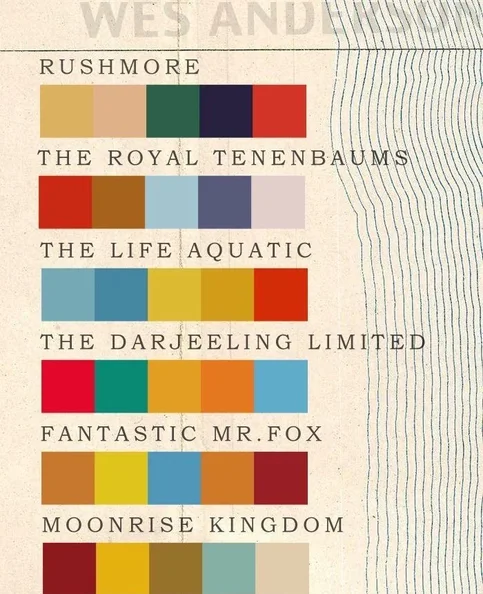
Wes Anderson uses color to create a distinct visual style and to enhance the emotional resonance of his films. He often employs a palette of bold, vibrant colors, which contribute to the whimsical and nostalgic tone of his work.
-
What is Wes Anderson’s approach to storytelling?
Wes Anderson’s approach to storytelling is characterized by a blend of wit, whimsy, and deep emotional resonance. He often tells his stories through a series of interconnected vignettes, each contributing to a larger, cohesive narrative.
-
What are some of the technical aspects of Wes Anderson’s films?
Wes Anderson’s films are known for their symmetrical compositions, intricate set designs, and meticulous attention to detail. He often uses a mix of live-action and stop-motion animation, as seen in “Isle of Dogs.”
-
How does Wes Anderson’s personal life influence his films?
Wes Anderson’s personal experiences, particularly his childhood and the influence of his parents’ divorce, have shaped his storytelling and the themes he explores in his films. His fascination with family dynamics and the search for belonging is often a reflection of his own life journey.
-
What is Wes Anderson’s legacy in the film industry?
Wes Anderson’s legacy in the film industry is one of innovation and artistic integrity. His unique style and storytelling techniques have influenced a generation of filmmakers, and his films continue to be celebrated for their creativity, humor, and emotional depth.