
L. Frank Baum, an American author, playwright, and actor, is best known for his seminal work, “The Wonderful Wizard of Oz.” This novel, published in 1900, has since become a cornerstone of children’s literature and has spawned numerous adaptations, including the iconic 1939 film. Baum’s life was a tapestry of creativity, perseverance, and a deep connection to his Midwest roots, which heavily influenced his storytelling. Despite the fame and success of his most famous work, Baum’s life was marked by a series of financial struggles and personal setbacks, making his legacy all the more compelling.
PERSONAL INFORMATION
| Name | L. Frank Baum |
|---|---|
| Gender | Male |
| Place of Birth | Chittenango |
| Nationality | United States |
| Date of Birth | [‘1856-05-15’, ‘1856’] |
| Date of Death | [‘1919-05-06’, ‘1919’] |
| Signature |  |
| Native Name | Lyman Frank Baum |
| Place of Death | Hollywood |
| Birth Name | Lyman Frank Baum |
| Languages Spoken | English |
| Native Language | English |
FAMILY
| Spouse | Maud Gage Baum |
|---|---|
| Children | Frank Joslyn Baum, Harry Neal Baum |
| Father | Benjamin Ward Baum |
| Mother | Cynthia Stanton |
CAREER
| Profession | journalist, film producer, writer, novelist, actor, children’s writer, screenwriter, poet, stage actor, science fiction writer, editor, film actor, suffragist, prose writer, playwright |
|---|---|
| Field of Work | editing, young adult literature, journalism |
| Notable Works | The Wonderful Wizard of Oz, The Marvelous Land of Oz, The Wizard of Oz, The Woggle-Bug Book, The Woggle-Bug, Tik-Tok of Oz, Ozma of Oz, The Life and Adventures of Santa Claus, The Maid of Arran, Mother Goose in Prose, The Last Egyptian, Father Goose: His Book, Father Goose’s Year Book, American Fairy Tales, Aunt Jane’s Nieces, Aunt Jane’s Nieces Abroad, Aunt Jane’s Nieces at Millville, Aunt Jane’s Nieces at Work, Aunt Jane’s Nieces in Society, Aunt Jane’s Nieces and Uncle John, Aunt Jane’s Nieces on the Ranch, Aunt Jane’s Nieces on Vacation, Aunt Jane’s Nieces Out West, Aunt Jane’s Nieces in the Red Cross, A Kidnapped Santa Claus, Animal Fairy Tales, The Magical Monarch of Mo, The Enchanted Island of Yew, Dorothy and the Wizard in Oz, The Road to Oz, The Emerald City of Oz, The Sea Fairies, Sky Island, The Patchwork Girl of Oz, The Patchwork Girl of Oz, The Tik-Tok Man of Oz, The Scarecrow of Oz, His Majesty, the Scarecrow of Oz, Rinkitink in Oz, The Lost Princess of Oz, The Tin Woodman of Oz, The Magic of Oz, Glinda of Oz, Queen Zixi of Ix, John Dough and the Cherub, The Flying Girl, The Daring Twins, Phoebe Daring, The Master Key, Sam Steele’s Adventures on Land and Sea, The Boy Fortune Hunters in the South Seas, Violet’s Dreams, L. Frank Baum’s Juvenile Speaker, By the Candelabra’s Glare, The Fairylogue and Radio-Plays, The Magic Cloak of Oz, The Bluebird Books, Mary Louise in the Country, Mary Louise Solves a Mystery, Mary Louise and the Liberty Girls, Mary Louise Adopts a Soldier, Little Wizard Stories of Oz, Annabel, Queer Visitors from the Marvelous Land of Oz, Dot and Tot of Merryland, Daughters of Destiny, The Fate of a Crown, Policeman Bluejay, The Runaway Shadows, The Gray Nun of Belgium, Prince Silverwings, Plays of L. Frank Baum, Tamawaca Folks, The Twinkle Tales |
| Work Period Start | 1897 |
| Member Of | The Uplifters |
Cost of becoming
L. Frank Baum’s journey to becoming a renowned author was fraught with challenges. Born into a wealthy family, Baum’s early life was relatively comfortable, but his ventures into various creative industries often ended in financial failure. His persistent pursuit of his artistic dreams, however, eventually paid off. The publication of “The Wonderful Wizard of Oz” brought him the recognition and financial stability he had long sought. Yet, the success of the book also came with its own set of challenges, such as the pressure to meet public expectations and the continuous need to produce popular content. Baum’s resilience and unwavering commitment to his craft ultimately defined his legacy, but the path to this recognition was paved with numerous sacrifices and hard-earned lessons.
Identity before fame
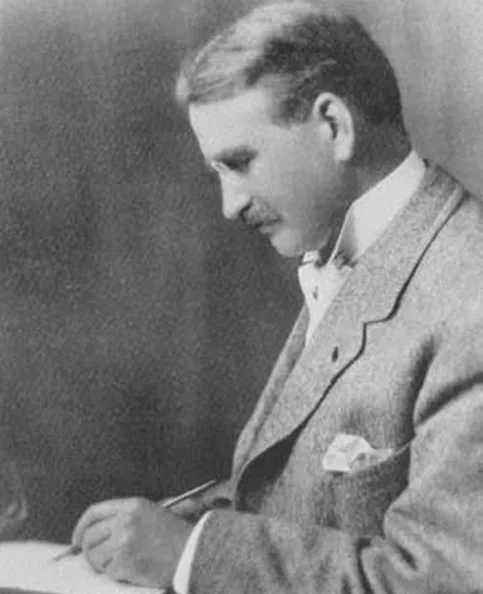
Before achieving literary fame, L. Frank Baum led a varied and often turbulent life. He was born in Chittenango, New York, in 1856, into a family that would later become wealthy from the oil business. Baum’s early interests included theater, writing, and poultry farming, reflecting his eclectic and adventurous spirit. Despite his family’s success, Baum’s own ventures, such as his theater productions and business enterprises, often ended in financial ruin. These early failures, however, provided him with invaluable experiences and insights that would later enrich his writing. His deep understanding of human nature and his ability to capture the essence of Americana in his stories can be traced back to these formative years.
Production Houses Associated With L Frank Baum
| Production House | Number of Movies |
|---|---|
| Universal Film Manufacturing Company | 1 |
| The Radio Play Company of America | 1 |
Directors L Frank Baum Frequently Works With
| Director | Number of Movies |
|---|---|
| Elmer Clifton | 1 |
| Francis Boggs | 1 |
| Otis Turner | 1 |
Movie Genres of L Frank Baum
| Genre | Number of Movies |
|---|---|
| Drama | 1 |
| Adventure | 1 |
| Fantasy | 1 |
Year-wise Movies of L Frank Baum
| Year | Number of Movies |
|---|---|
| 1918 | 1 |
| 1908 | 1 |
Timeline
- 1856 – Born in Chittenango, New York
- 1869 – Began attending a strict military academy but was withdrawn due to health issues
- 1873 – Started his first theater venture, the “Baum Theatre Company,” which failed within a year
- 1882 – Married Maud Gage, the daughter of a women’s suffrage activist
- 1888 – Moved to Aberdeen, South Dakota, where he operated a variety store and edited a local newspaper
- 1897 – Published his first book, “Mother Goose in Prose”
- 1900 – Published “The Wonderful Wizard of Oz,” which became an instant success
- 1902 – Adapted “The Wonderful Wizard of Oz” into a successful stage musical
- 1910 – Moved to Hollywood to produce silent films based on his books
- 1919 – Died in Hollywood, California, at the age of 62
Favourites
- Theater and theater productions
- Writing, particularly children’s literature
- Poultry farming and raising fancy chickens
- Traveling, especially to California
- Literature by Charles Dickens and Mark Twain
- Nature and the outdoors, particularly the landscapes of the Midwest
- Theater and music, including opera and vaudeville
- Family life and spending time with his children and grandchildren
Controversies
- His support for the Boer War, which was met with criticism from some quarters
- Allegations of racism in his portrayal of Native Americans in some of his works
- His business failures, which led to financial difficulties and legal troubles
- Conflicts with his publishers over royalty payments and contract terms
- Disagreements with his collaborators, particularly in the production of stage adaptations of his books
- His advocacy for women’s suffrage, which was controversial at the time
- His involvement in theosophy and other esoteric beliefs, which some found unsettling
- His portrayal of social and political issues in his books, which sometimes drew criticism from conservative groups
- His use of animal symbolism in his stories, which some animal rights activists found problematic
Control vs chaos
Baum’s life was a delicate balance between control and chaos. His early business ventures, while creative and ambitious, often ended in financial disaster, reflecting the chaotic nature of his entrepreneurial spirit. However, his writing, particularly his magical stories, provided him with a sense of control and order. Through his narratives, Baum was able to create worlds that were both fantastical and ordered, offering a haven from the uncertainties of real life. This duality of control and chaos is evident in his characters, who often navigate complex and unpredictable environments, ultimately finding their way through the power of imagination and resilience.
Emotional geography
Baum’s emotional geography was deeply rooted in the landscapes of his childhood and the Midwest. The rolling hills of New York and the vast prairies of South Dakota provided the backdrop for his most vivid and enduring stories. These places, with their unique character and natural beauty, influenced his storytelling, infusing his works with a sense of place and belonging. Baum’s emotional connection to these landscapes can be seen in the way he describes the Emerald City, the Yellow Brick Road, and the magical realms he created. His ability to evoke the reader’s sense of wonder and nostalgia is a testament to his profound understanding of the emotional power of place.
FAQs
-
Who is L. Frank Baum?
L. Frank Baum was an American author, playwright, and actor best known for writing “The Wonderful Wizard of Oz.” He was born in 1856 and died in 1919, leaving behind a legacy of imaginative and influential children’s literature.
-
What is L. Frank Baum’s most famous work?
L. Frank Baum’s most famous work is “The Wonderful Wizard of Oz,” a children’s novel published in 1900. This book has become a classic and has been adapted into numerous films, stage productions, and other media.
-
Where was L. Frank Baum born?
L. Frank Baum was born in Chittenango, New York, in 1856. He grew up in a wealthy family, but his own financial journey was marked by both success and failure.
-
What other books did L. Frank Baum write besides “The Wonderful Wizard of Oz”?
Baum wrote numerous books, including sequels to “The Wonderful Wizard of Oz” such as “The Marvelous Land of Oz,” “Ozma of Oz,” and “Dorothy and the Wizard in Oz.” He also wrote other children’s books like “Father Goose: His Book” and “The Life and Adventures of Santa Claus.”
-
What was L. Frank Baum’s early career like?
Baum’s early career was diverse and often unsuccessful. He worked in theater, ran a variety store, and edited a local newspaper. His ventures into business and theater often ended in financial ruin, which provided him with valuable experiences for his later writing.
-
Was L. Frank Baum married?
Yes, L. Frank Baum married Maud Gage in 1882. Maud was the daughter of a women’s suffrage activist, and their marriage was a long and supportive partnership. They had four sons together.
-
What inspired L. Frank Baum to write “The Wonderful Wizard of Oz”?
Baum was inspired by his love for fairy tales and his desire to create a distinctly American fairy tale. He drew from his own experiences, the landscapes of the Midwest, and his interest in storytelling to craft the magical world of Oz.
-
How did “The Wonderful Wizard of Oz” become so popular?
“The Wonderful Wizard of Oz” became popular due to its unique and engaging story, relatable characters, and the timeless themes of friendship, courage, and self-discovery. The success of the book led to numerous adaptations, including the famous 1939 film.
-
Did L. Frank Baum write about any controversial topics?
Yes, Baum’s works sometimes addressed controversial topics. Some of his books included racial and social commentaries, and his portrayal of Native Americans and other groups has been critiqued. However, his intentions were often to challenge and question societal norms.
-
What was L. Frank Baum’s relationship with the Theosophical Society?
Baum was a member of the Theosophical Society, an organization that explored esoteric beliefs and spiritual practices. His involvement in theosophy influenced some of his writing, particularly in his later works, which often included themes of spiritual growth and enlightenment.
-
How did L. Frank Baum’s personal life influence his writing?
Baum’s personal life, including his financial struggles, family dynamics, and interest in various creative pursuits, deeply influenced his writing. His experiences with failure and success, as well as his love for nature and storytelling, are evident in the rich and imaginative worlds he created.
-
What is the legacy of L. Frank Baum?
L. Frank Baum’s legacy is multifaceted. He is primarily remembered for “The Wonderful Wizard of Oz,” which has become a cultural phenomenon. His contributions to children’s literature, his innovative storytelling, and his enduring influence on popular culture continue to be celebrated and studied.
-
How did L. Frank Baum’s work impact children’s literature?
Baum’s work, particularly “The Wonderful Wizard of Oz,” had a significant impact on children’s literature. His stories introduced a new level of fantasy and imagination, making children’s books more engaging and accessible. His focus on strong, relatable characters and timeless themes has inspired generations of authors and readers.
-
Are there any biographies of L. Frank Baum?
Yes, there are several biographies of L. Frank Baum. Notable works include “L. Frank Baum: Creator of Oz” by Katharine M. Rogers and “The Wizard of Oz and Who He Was” by Martin Gardner. These books provide detailed insights into his life, work, and the cultural context of his time.